
Packing for Europe to travel means you have to deal with travel restrictions, changing weather, and long travel days. The best packing tips don’t suggest carrying more items, make sure to choose the right shoes, clothes, and travel essentials that work across multiple cities in Europe. Whether you’re planning a weekend city break in Paris, a summer trip through Italy, or a winter adventure in Central Europe, this guide covers what to pack for Europe trip plans realistically and what you can safely leave behind.
How to Choose Your Luggage for Europe
The type of luggage you choose whether make or break your trip to any of Europe’s great destinations. This only comes from hard-learned experience: carrying large amounts of luggage through Europe’s historic city centers, frequent train transfers, and budget airline flights leads to uninvited problems.
Carry-on vs Checked Bag
If your trip is two weeks or less, a standard carry-on is usually more than enough. A carry-on suitcase lets you avoid baggage fees and baggage claim waits, giving you more time to explore your destination instead of transporting luggage.
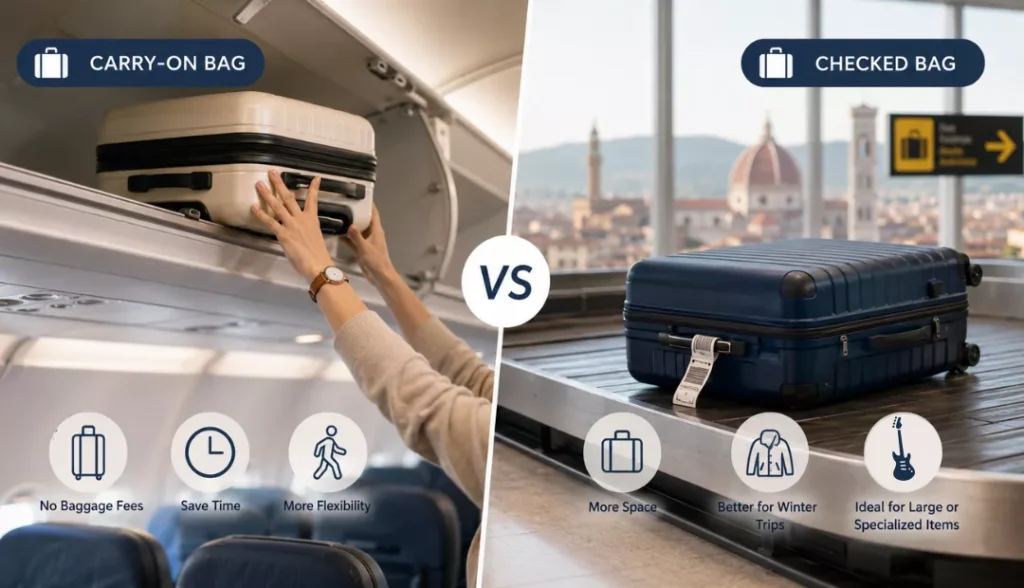
Since Europe’s airlines are quite diverse, be aware of each airline’s individual baggage policies. Full-service airlines generally have better baggage policies as compared to budget airlines. These budget airlines have cabin bag fees and checked bag fees. Moreover, these airlines also have weight restrictions for cabin luggage that usually fall between 7 and 10 kg, so be sure to check before packing.
There are a few rare exceptions to the checked bag vs carry-on rule. Traveling across Europe during the winter, carrying large or specialized equipment, or staying in a single city for more than a week are all good reasons to travel with a checked bag. Otherwise, a carry-on helps maximize your travel experience.
Best Bag Types for Europe
Because airport terminals and train stations tend to favor easy maneuverability across open spaces, rolling bags are the best bag type for European travel. However, Europe’s historic districts feature cobblestone streets, narrow sidewalks that may cause difficulty when traveling with rolling luggage.
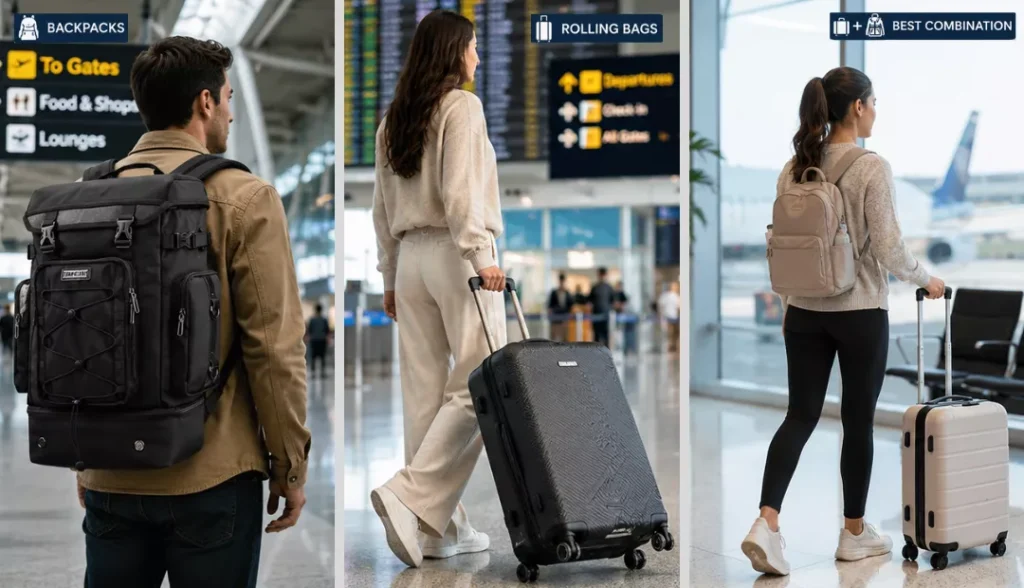
Backpacks, especially large and heavy ones are much more maneuverable, allowing easier travel across districts. Multi-city itineraries and travel that incorporates public transit are also much easier when using a backpack, but only carry manageable items, avoiding over packaging.
For most people, a small rolling suitcase combined with a small daypack is the most convenient and practical travel solution.
Essential Documents and Money for Europe
Before thinking about clothing, gadgets, or anything else you may carry, when you pack for a Europe trip, ensure your travel documents and financial essentials are organized. These items are far more important than any outfit you might miss, because you can buy new clothes, but you cannot travel without the necessary documents.
Travel Documents Checklist
The first thing you should consider for your travel plans is your passport. Check your passport’s expiration date before you book your tickets, as some European countries require your passport to be valid for 6 months after your trip is over.
Check to see if you need a visa to visit Schengen Area countries. European countries that do not require a visa for entry will implement the European Travel Information and Authorisation System (ETIAS). According to the European Union, ETIAS will begin functioning in the last quarter of the year 2026. As of now, travelers do not need to take any steps.
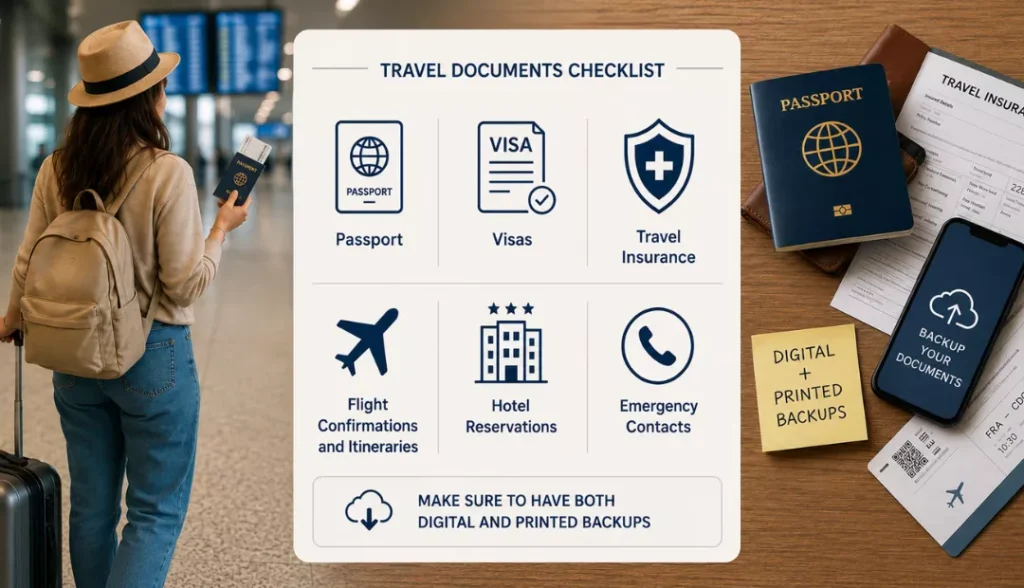
Nowadays, travel insurance is a must-have for every type of trip. It provides protection against unexpected situations such as trip cancellations, injuries, illnesses, and lost or stolen belongings.
Make sure to have both digital and printed backups:
- Your passport
- Visas
- Travel insurance
- Flight confirmations and itineraries
- Hotel reservations
- Contact information for emergencies
Cash vs Card in Europe
Although Europe is not entirely cashless, so always carry a small amount of local currency for a smoother payment experience. Most Eurozone countries like Germany, Austria and the Southern/Eastern part of Europe still heavily depend on physical cash while countries like Sweden and Norway operate on cards and mobile payments. Also, countries like France, the UK, and Spain are highly digitized and contactless-friendly, making cash-free travel easy.
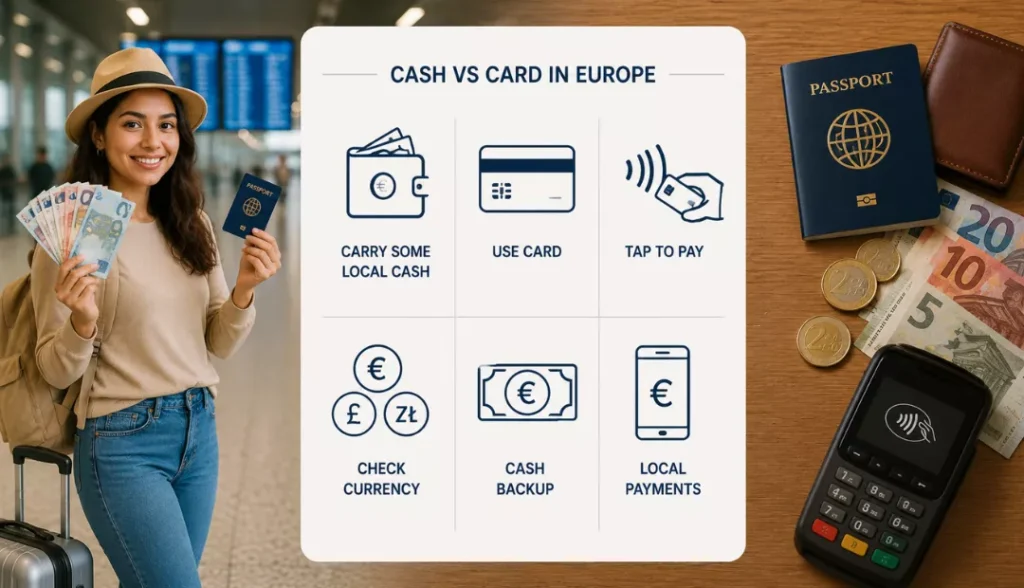
Not every European country uses the euro. Destinations such as the United Kingdom, Switzerland, Czech Republic, Hungary, and Poland maintain their own currencies, so checking local payment methods before arrival is advisable.
Clothing to Pack for Europe (by Season)
The climate of Europe varies dramatically by region and season. Knowing the weather conditions of a specific region makes packing easier when deciding clothes to pack for a Europe trip, as you don’t need to carry for the entire continent.
Summer
Traveling through Southern Europe will likely mean experiencing warm temperatures and bright sunlight. It also means walking around a lot.
Choose lightweight, breathable fabrics such as linen, cotton, and moisture-wicking, and maintain comfort on long sightseeing days.
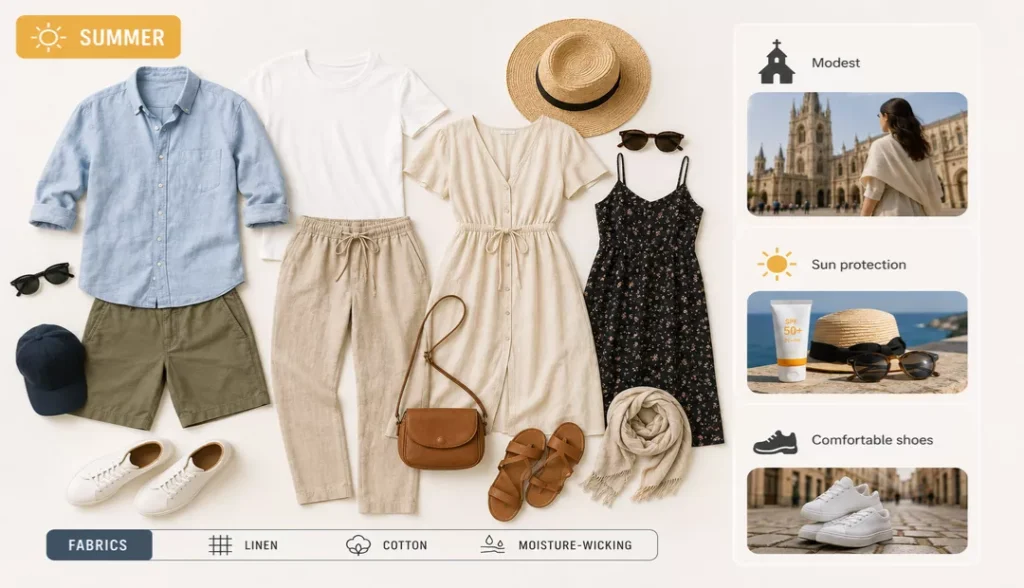
Do remember, there are dress codes at many places of worship especially if you plan to visit a church, cathedral, or another historic site.
Don’t forget the sun protection. Sunscreen, a wide-brim hat, and sunglasses should definitely be a part of your packing list.
Spring / Autumn
These seasons are the most favored for European travel as crowds are smaller, temperatures have a more pleasant climate, and there is less rapid weather change.
However, for unpredictable weather conditions layering works best during these seasons. Instead of bringing just one heavy jacket, pack multiple layers that can be added or removed throughout the day.
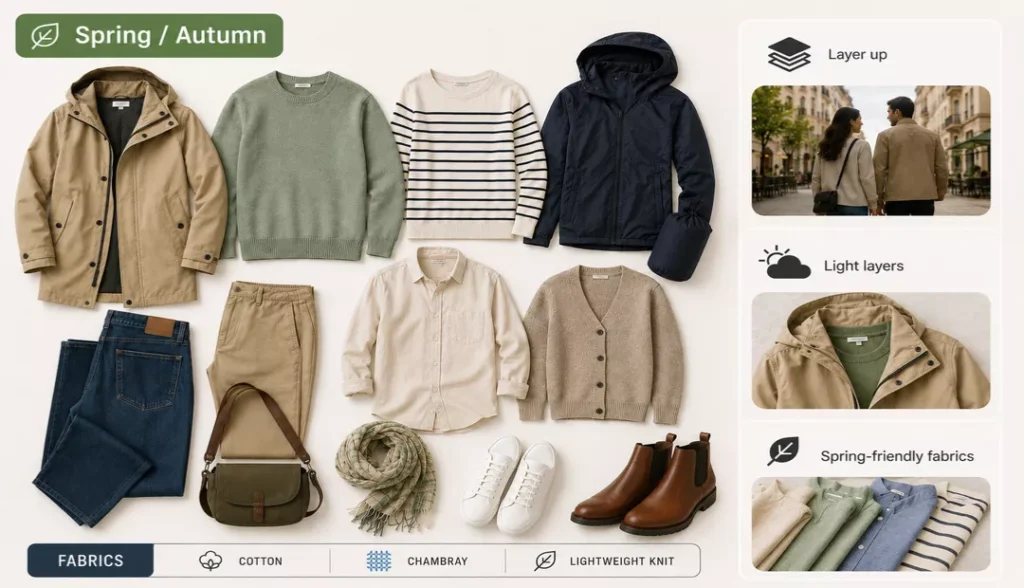
Packable rain jackets provide a quick extra layer when needed. A good balance of sweaters, long-sleeve shirts, and versatile trousers creates multiple outfit combinations. Choosing neutral colors also helps keep packing volume down.
These unpredictable rains make a waterproof jacket especially necessary.
Winter
Traveling in winter takes extra planning but not necessarily more luggage.
Merino wool and modern performance thermal base layers are great because they are bulky and very warm.
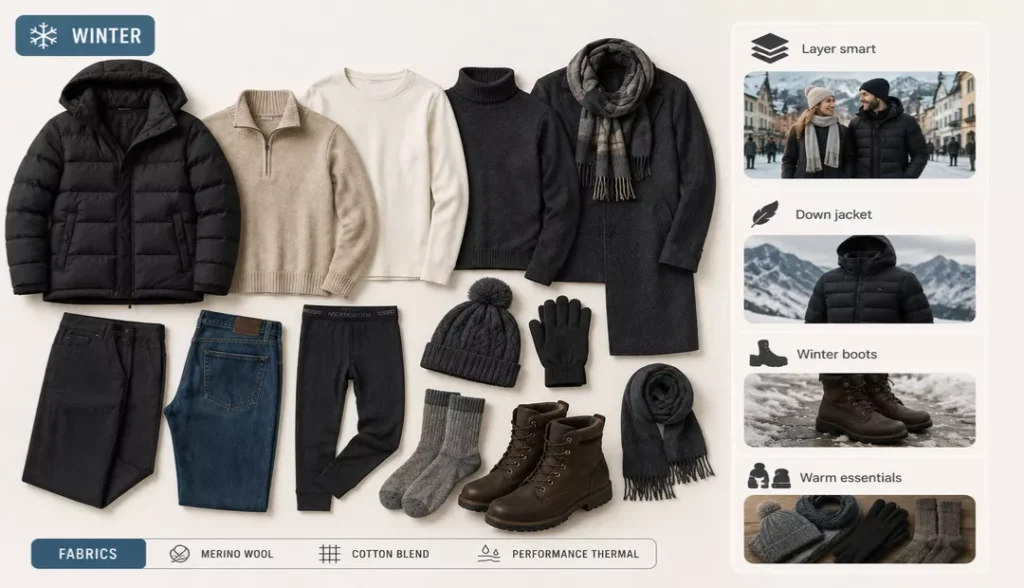
A good down jacket is enough to keep you warm, replacing your bulky winter jacket. It also makes sense when moving between cold and warm areas easier.
Winter boots are also important particularly in locations that experience slushy, snowy or rainy conditions. Warm socks, gloves, and a scarf can dramatically improve comfort without consuming much suitcase space.
Shoes to Pack for Europe
Few packing decisions affect your trip more than footwear.
Most visitors underestimate how much walking Europe involves. Exploring historic city centers often means spending entire days on foot across uneven surfaces, stone streets, hills, and public transportation networks.
How Many Pairs?
A simple three-pair rule works well for most trips.
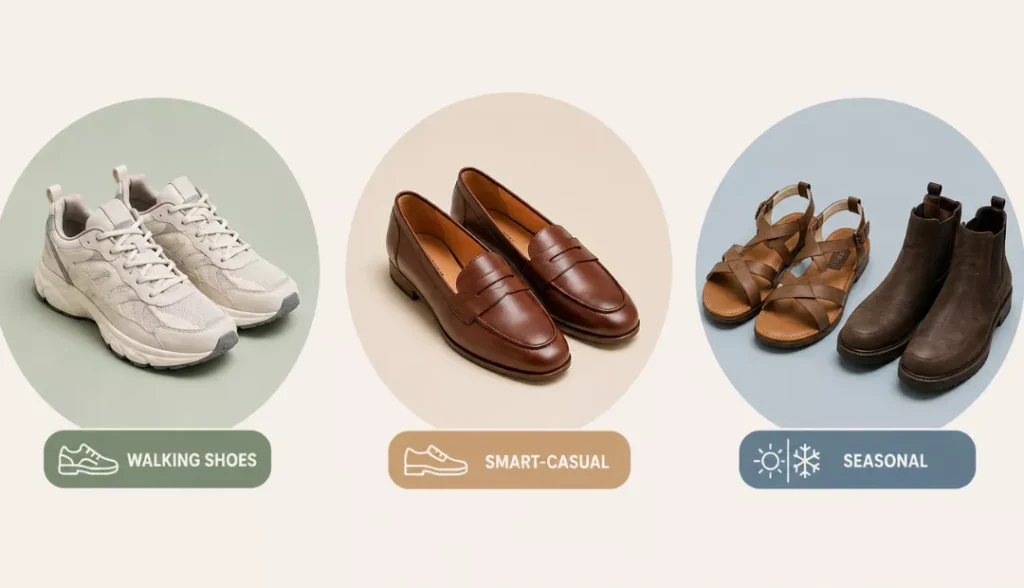
One pair should be dedicated walking shoes that provide support for long sightseeing days. A second pair can serve smart-casual occasions such as dinners, cultural events, or evenings out. The third pair depends on the season and itinerary, typically either sandals for summer or boots for colder weather.
What are Some Best Walking Shoes for Europe
In cities like Rome, Prague, Lisbon, and Dubrovnik, you find antiquated cobblestone roads that expose the design flaws of bad shoes when deciding what to pack for a Europe trip. The best-performing shoes typically feature supportive, cushioned midsoles and durable, flexible outsoles for a comfortable travel experience.
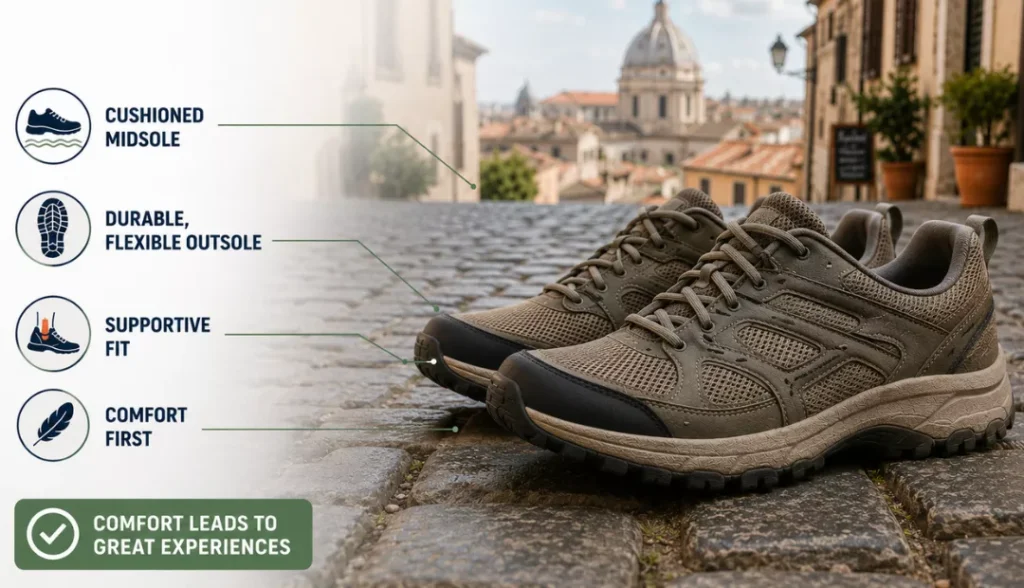
Instead of focusing on the aesthetics, prioritize comfort and fit. Practical walking shoes lead to enjoyable experiences and can really positively impact the overall trip.
Electronics and Tech to Bring to Europe
Power Adapters
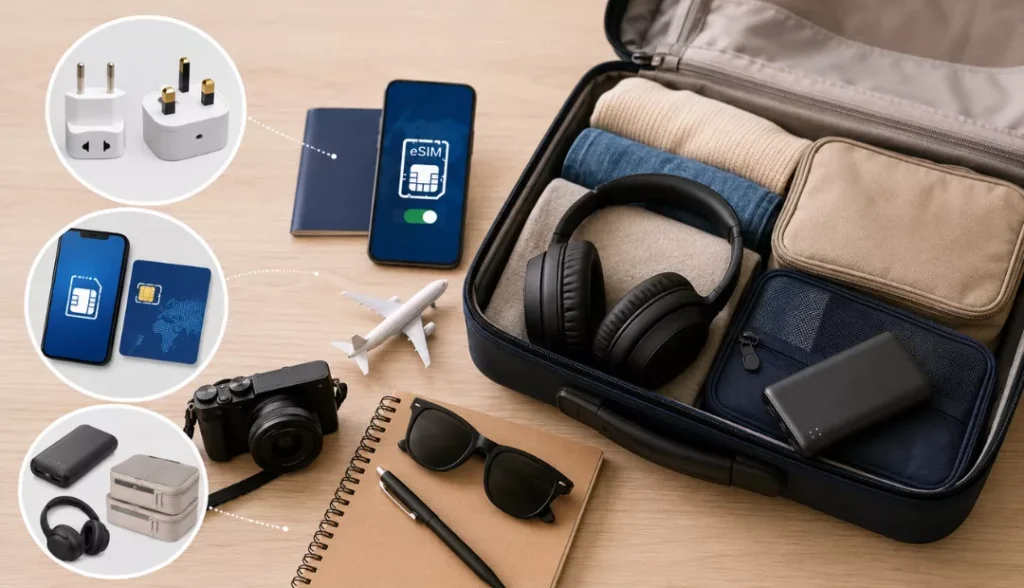
Most of continental Europe uses Type C electrical outlets, while the United Kingdom and Ireland primarily use Type G plugs.
A universal travel adapter eliminates the need to purchase separate adapters for different countries and is one of the most useful travel accessories you can bring.
SIM and Connectivity
Staying connected in Europe is easier than ever thanks to eSIM technology.
Many travelers now purchase regional eSIM plans before arrival, allowing immediate access to mobile data upon landing. This option often proves more convenient than purchasing local physical SIM cards.
Free Wi-Fi is widely available in hotels, airports, cafés, and train stations, but coverage and reliability can vary significantly.
Other Tech Essentials
- A portable power bank
- Packing cubes
- Noise-cancelling headphones
Toiletries and Health Items for Europe
Most toiletries can be purchased locally if necessary, but bringing key essentials helps avoid unnecessary inconvenience upon arrival.
TSA Liquids Rule
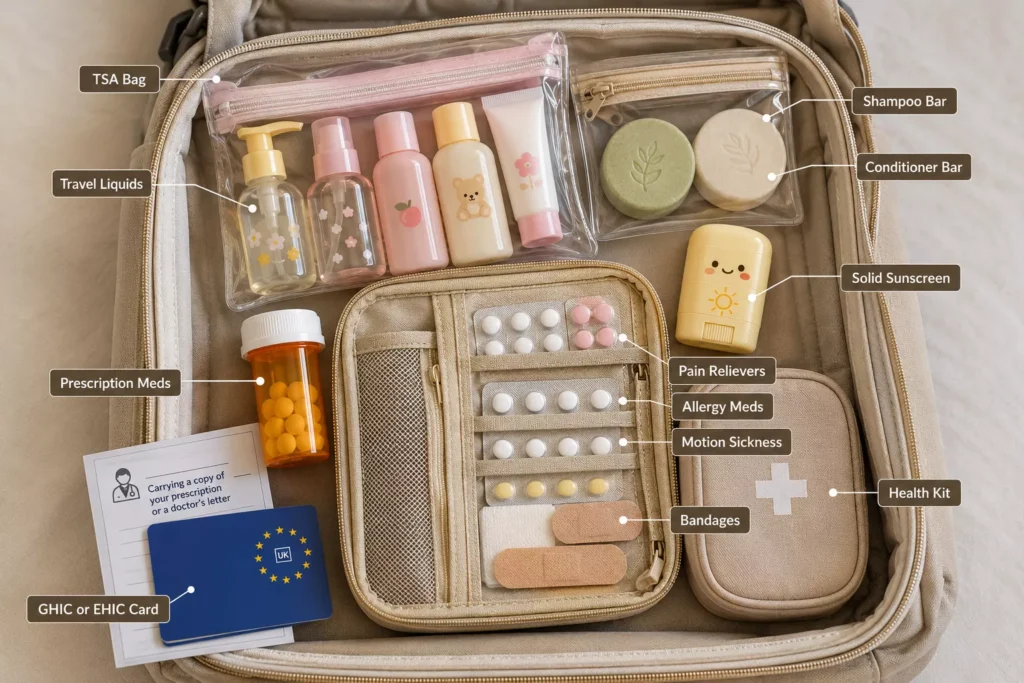
If you’re traveling with carry-on luggage, remember that liquids generally must be carried in containers of 100 ml (3.4 oz) or less and placed inside an approved transparent bag.
To reduce bulk and avoid liquid restrictions, many travelers now use solid alternatives such as shampoo bars, conditioner bars, and solid sunscreen products.
Medications and Health
If you’re traveling with prescription drugs, carrying a copy of your prescription or a doctor’s letter can help avoid complications at border controls.
For UK travelers, a GHIC or EHIC card can provide access to certain state healthcare services in participating European countries.
A basic travel health kit should include pain relievers, allergy medication, motion sickness tablets, adhesive bandages, and any personal medical necessities.
Final Thoughts
The best Europe packing list focuses on versatility rather than quantity. A few carefully chosen essentials will serve you far better than an oversized suitcase filled with unnecessary items. Europe rewards travelers who pack light. Whether you’re navigating a crowded train station in Italy, climbing hills in Portugal, or exploring historic streets in Prague, knowing what to pack for Europe trip adventures can make your journey easier every time.
Explore More: