

When deciding what to wear on a long flight, the ideal outfit should include soft, loose layers made from natural, breathable fabrics. Comfort should always come first, which means avoiding tight waistbands, stiff blue denim, and footwear that becomes uncomfortable after hours in the air.
Clothes that you wear on a long-haul flight affects far more than appearance.
It’s different from normal indoor environments, the humidity level of airplane cabins usually stays at around 15%, very low, which can dry your skin and body fast. Now double that with cabin pressure changes, changing temperatures, hours of sitting and the increased chances of circulation problems on flights over four hours and your outfit becomes part of the journey.
This guide covers the golden rules for comfortable long-haul flight outfits, what to wear based on different traveler types and situations, and the best fabrics, shoes, and accessories for long-distance travel.
Golden Rules For Long-Haul Flight Clothing
Rule # 1 — Comfort, Not Style
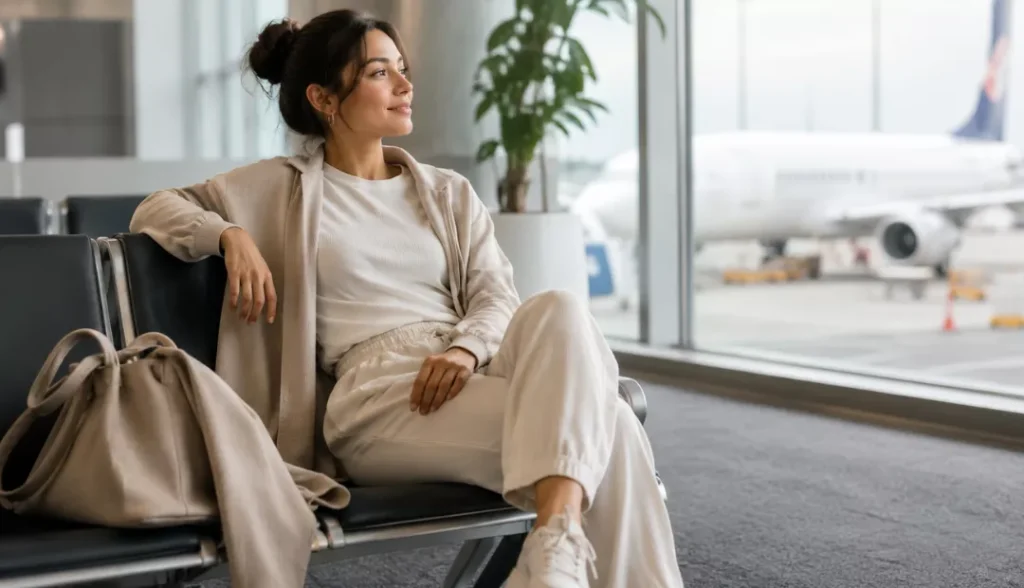
Most travelers will mistakenly think comfort in the airports means oversized tees, hoodies and sloppy sweatpants. But in reality, the optimal outfits for long-haul flights are an artful mess of comfort, mood and thought-specific dressing.
Soft trainers, well-fitted relaxed trousers, flexible knit co-ords, breathable T-shirts and loose outer layers look posh enough but during long hours of sitting. The secret lies in selecting fabrics that incorporate motion and softness into the design.
Forget about overly stiff, tight shapewear and ultrafitted clothes when it comes to long-haul flights. Your body naturally swells slightly during extended travel, especially around the waist, feet, and legs, so flexibility matters more than trend-focused styling.
Rule # 2 — Layer Up
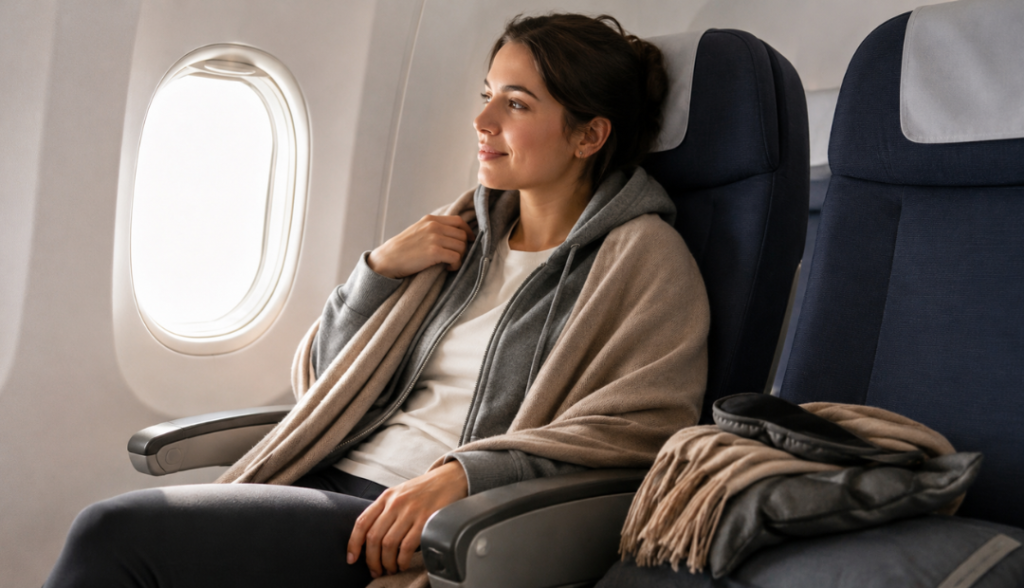
Temperature shifts are one of the most annoying aspects of long-distance flights. Airports can be hot and crowded, but once the airplane is airborne, cabins can become surprisingly cold during overnight flights.
Layering gives you control throughout the journey. One of the best base layers, paired with a lightweight hoodie, cardigan, zip jacket, or oversized scarf, creates versatile layering options and comfort without bulk.
Scarves also come in handy for long-haul travel – they double up as blankets, neck support, shoulder cover and warming aids when sleeping.
Rule # 3 — Opt For Breathable Fabrics
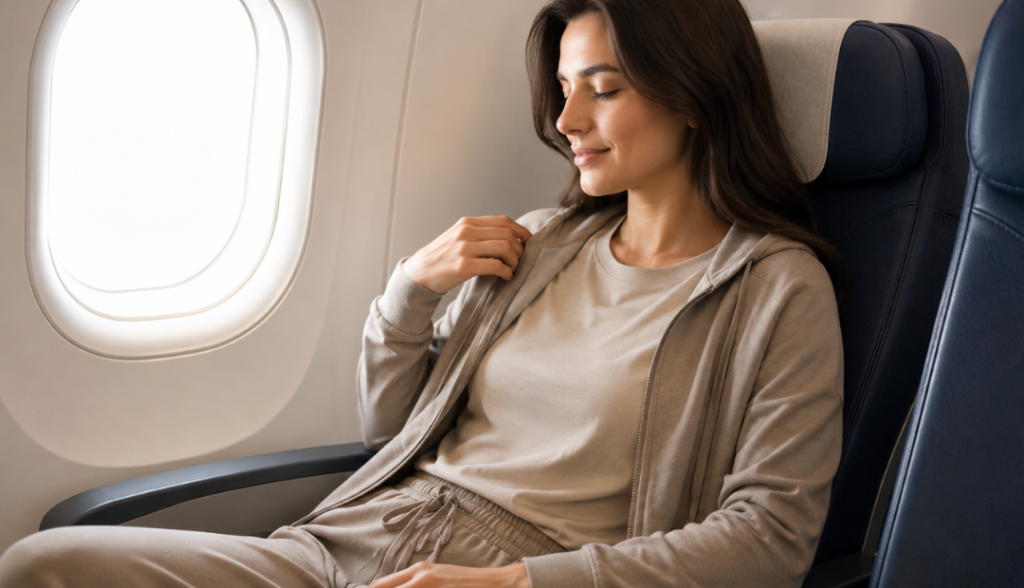
Breathable materials help maintain body temperature, limiting the build-up of sweat on your clothing and keeping it wearable for extended periods. Natural fabrics and performance blends generally work best for this, as they allow airflow but remain soft against the skin. Cotton blends, bamboo jersey, merino wool and moisture-wicking fabrics are the workhorses of travel wear
Most synthetic fabrics often hold heat and become uncomfortable after a while, especially on packed flights.
Rule # 4 — Avoid Tight Clothing That Restricts Circulation
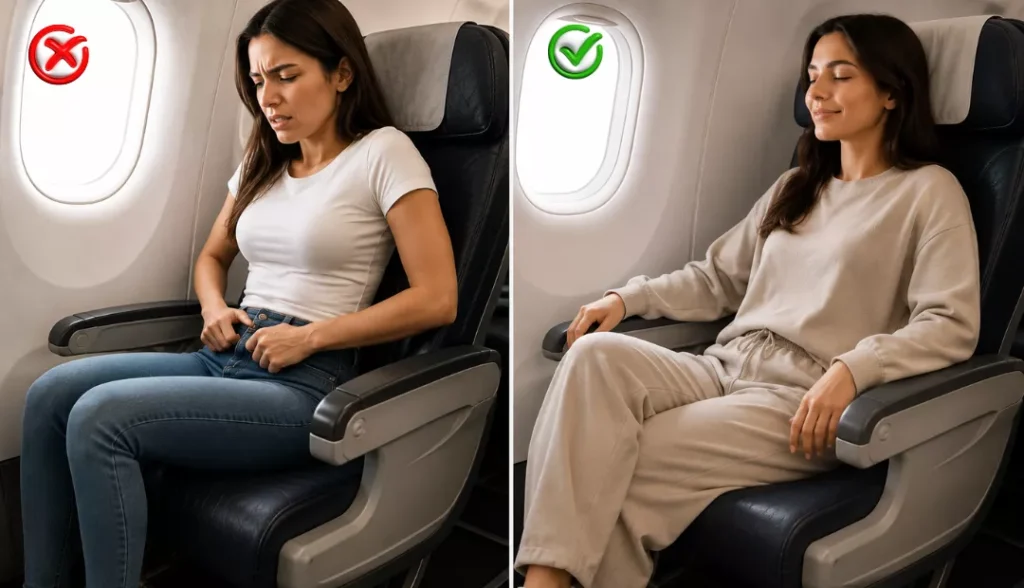
Longer flight journeys of more than four hours can lead to poor blood circulation, particularly in the legs and feet.
Tight waistbands, skinny jeans, restrictive leggings or pants, and clothing with a lot of compression may feel fine when moving around but can become uncomfortable when sitting for longer periods.
Loose clothing allows better body motion, improves circulation, and causes less pressure on the body-flow. This is particularly important on overnight and international routes where travellers are glued to their seat for long periods.
Rule # 5 — Dress in Slip-On Shoes
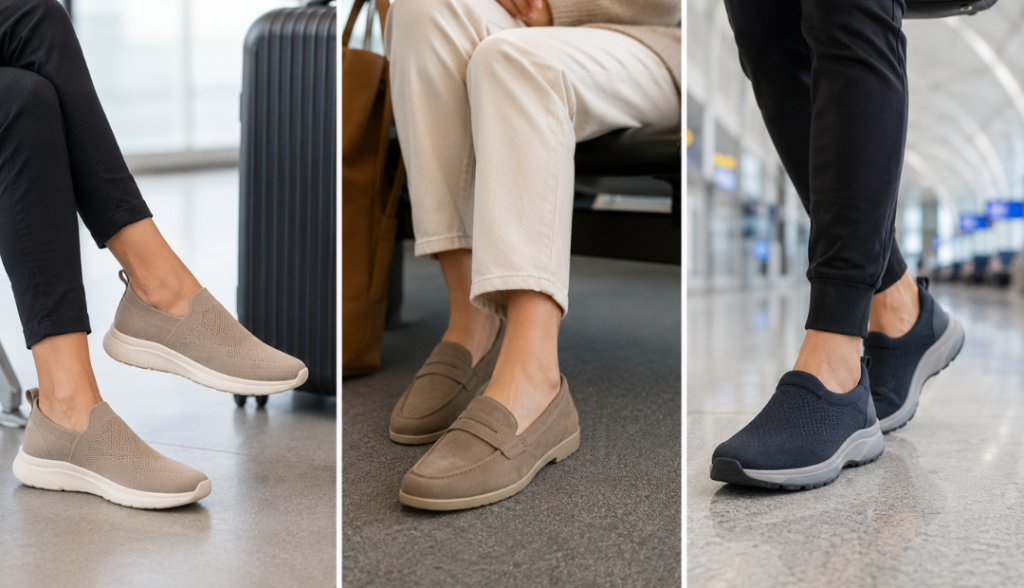
Shoes are neglected when designing a flight outfit but shoes can be the make or break factor on a travel day! Long flights frequently cause feet to swell, so wearing tight shoes may become uncomfortable before the end of the journey.
Slip-on sneakers, soft loafers or supportive walking shoes are better as they strike the right balance between comfort and practicality.
Comfortable footwear is especially important for long layovers or airport transfers where travellers are encouraged to walk kilometres between terminals.
How to Dress for a Long Flight — Gender and Travel-Context
For Women
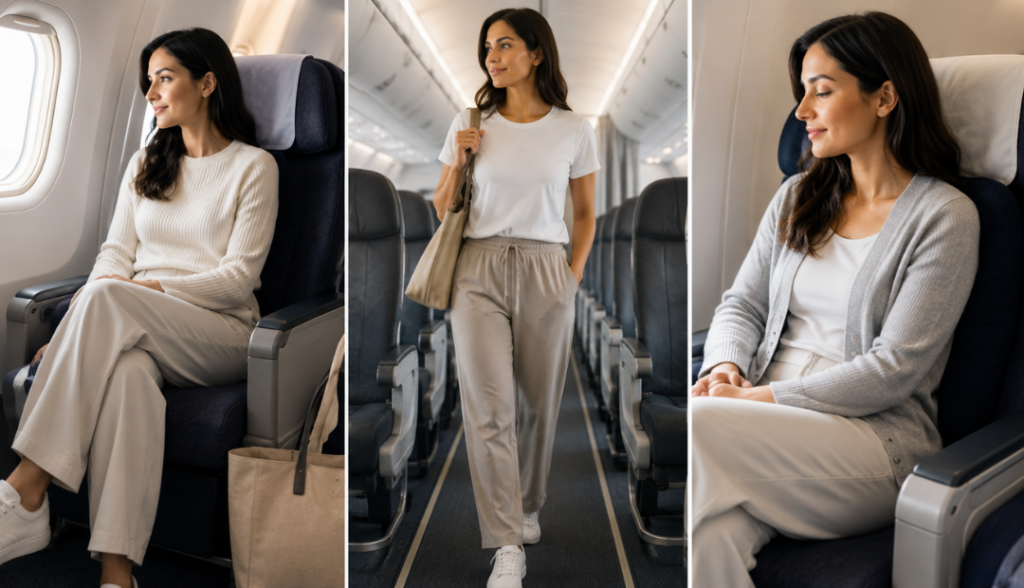
Comfortable wear for women traveling to nice places often ends up being a compromise between softness, layering and no restriction on movement.
One of the most versatile combinations remains a wide-leg trouser worn with a breathable knit top, both relaxed yet smart. Soft wrap dresses layered with leggings or lightweight cardigans also work well.
Wireless bras or soft bralettes are generally more comfortable than structured underwire styles during extended sitting.
For Men
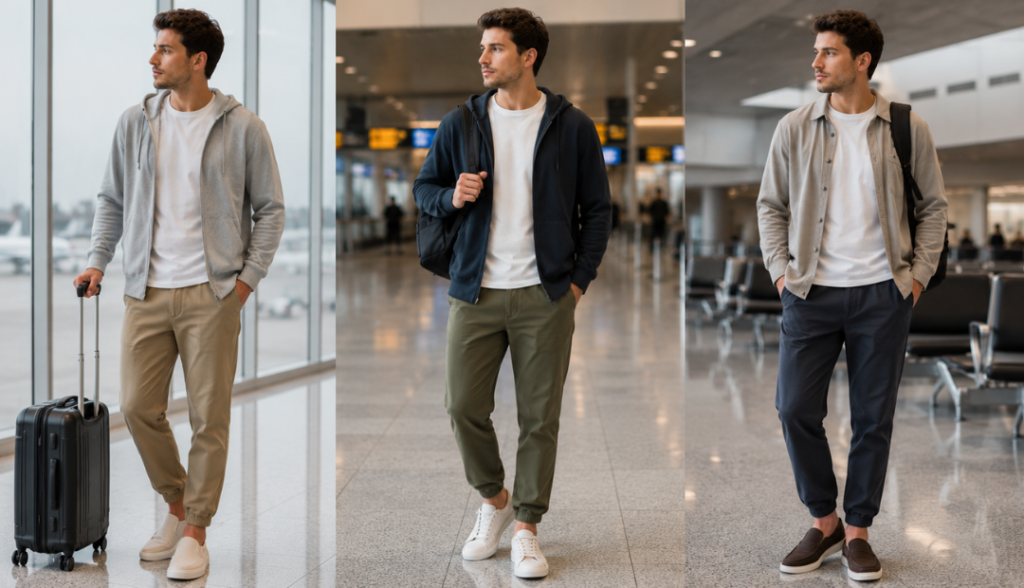
Chino joggers or loose-fit travel pants are more comfortable than rigid jeans, yet still look smart. Pair them with a soft crew-neck T-shirt and a light zip hoodie, and you have an outfit that works both in-flight and while lounging at the airport.
Frequent travelers avoid belts consciously because they slow down in the airport checks and it hinders comfortable sitting over a longer period of time.
A comfy pair of lightweight sneakers or slip-on loafers to finish off the look in a way that still feels polished.
For Business Class Travellers
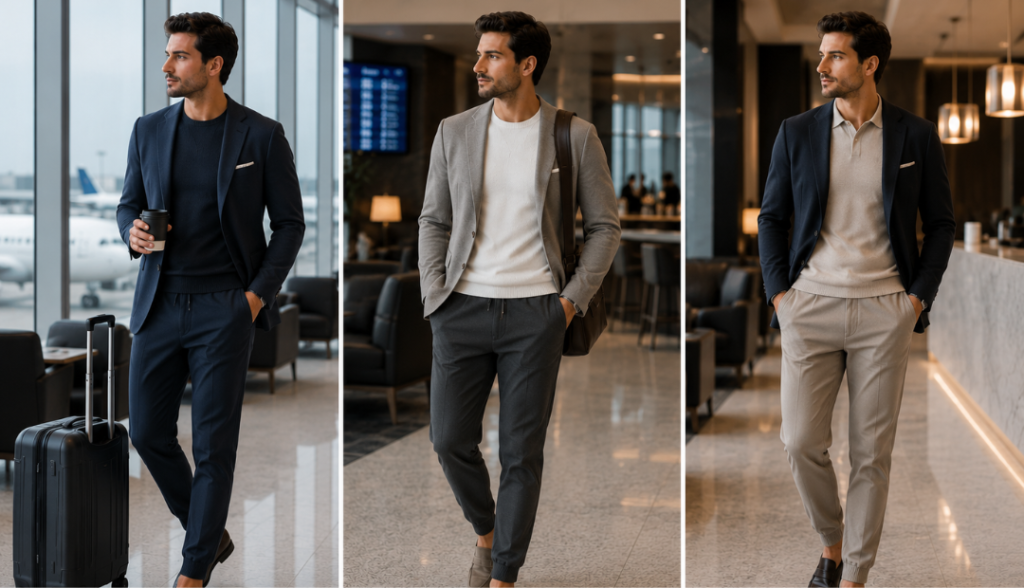
Business class flyers strive for a compromise between comfort and higher presentation.
Soft-structured blazers made from stretch fabrics also strike a nice balance, as they still look smart but don’t feel constricting. Many travelers today opt for tailored joggers or similar travel trousers, which look dressy but feel much more comfortable.
Tapered trousers lend themselves to a smart-casual travel style, while polished loafers and elevated knitwear help create a clean, smart-casual travel aesthetic.
With Young Children
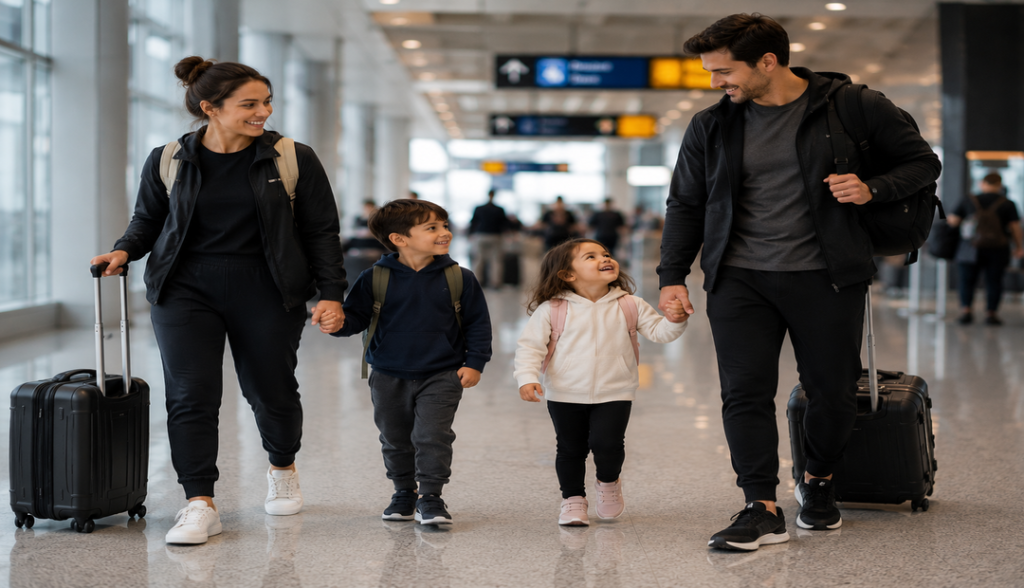
When you travel with kids, it completely changes the outfit priorities.
Parents often benefit from easy-change layers, dark colours that hide stains, and machine-washable fabrics that can handle spills and unexpected messes during travel.
Comfortable running shoes are especially important because navigating airports with children frequently involves fast walking, carrying bags, and quick movements between gates.
Best Fabrics for Flights Journeys
Merino Wool
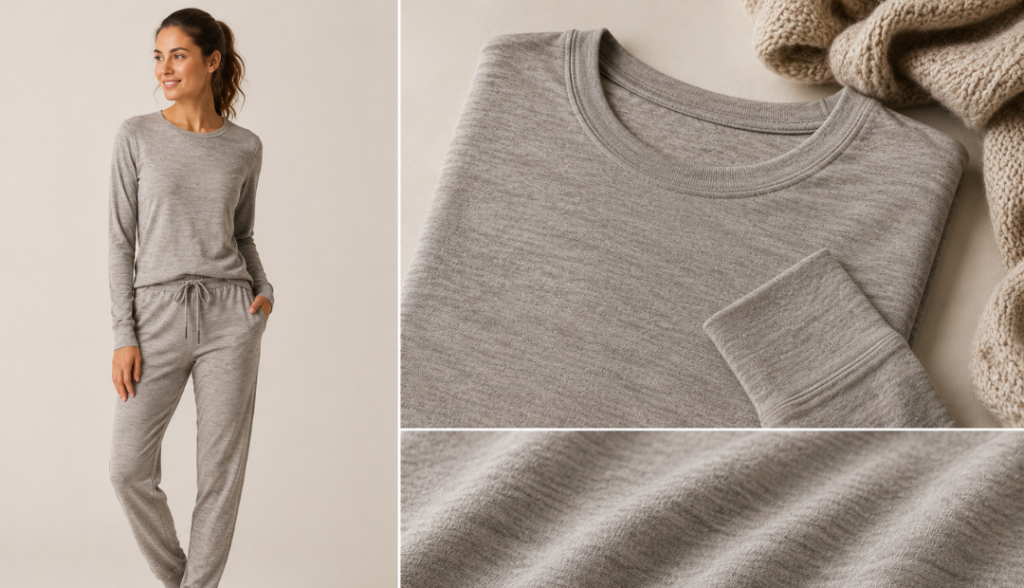
One of the best travel fabrics around hence, it is naturally breathable and temperature regulating but still soft against your skin.
Merino, unlike traditional wool, is lightweight and comfortable yet not quite so itchy or heavy. It’s also naturally odour resistant, which is great for long international flights.
Bamboo Jersey
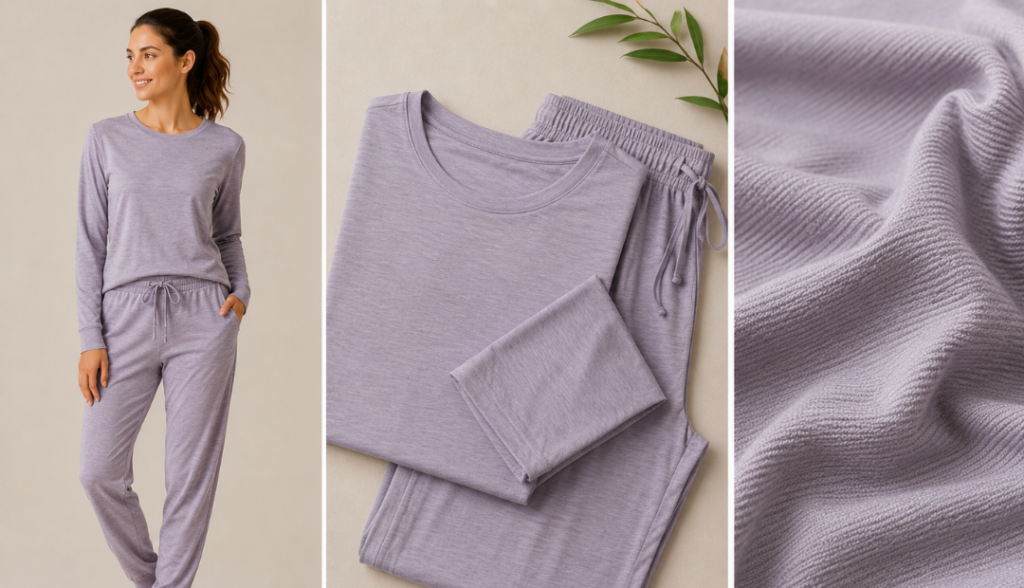
Due to its softness and breathable characteristics, bamboo fabric is gaining popularity as an alternative travel fabric in recent times.
Cotton
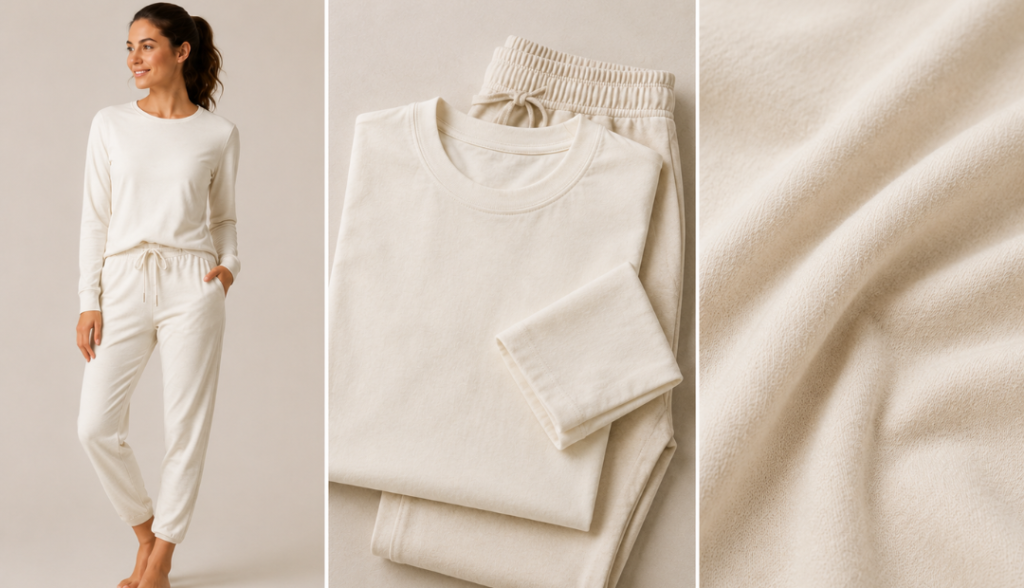
Cotton is still among the most breathable pure fabric for journey – it’s unbelievably comfortable.
It also traditionally performs very well when blended with stretch fabrics, as it shrinks less and has faster-drying properties.
Moisture-Wicking Synthetics
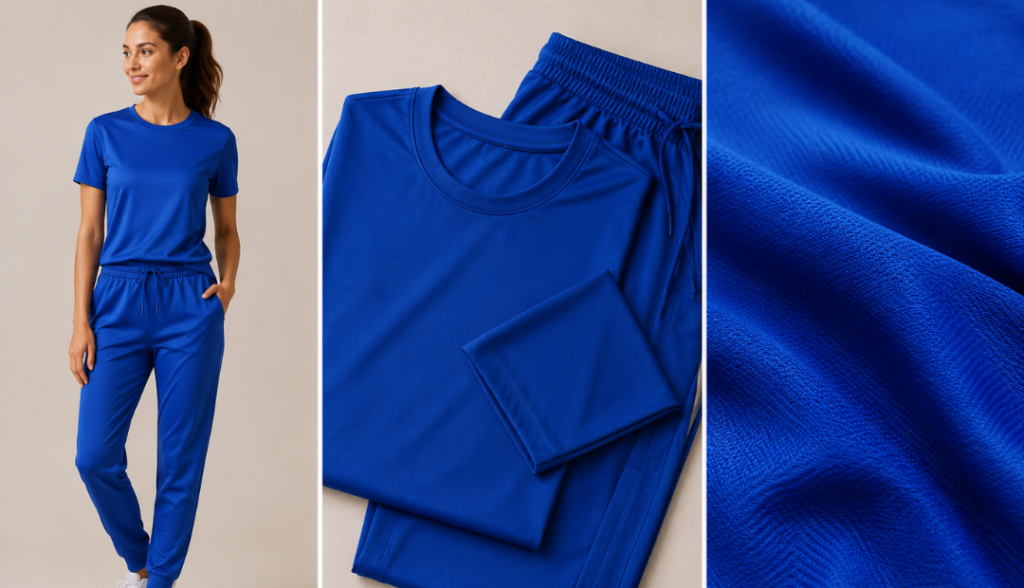
Today’s moisture-wicking fabrics are especially beneficial for travelers moving through warm destinations or active airport transfers.
Moisture-wicking fabrics are able to draw water away from skin and dry quickly, helping you stay comfortable on long travel days.
Fabrics to Avoid
Hard denim cuts mobility and gets uncomfortable after prolonged sitting. Heavy wool may feel overly warm and bulky inside airplane cabins. The polyester-heavy fabrics, no matter what just avoid them.
Things NOT to Wear on Long Flight Journeys
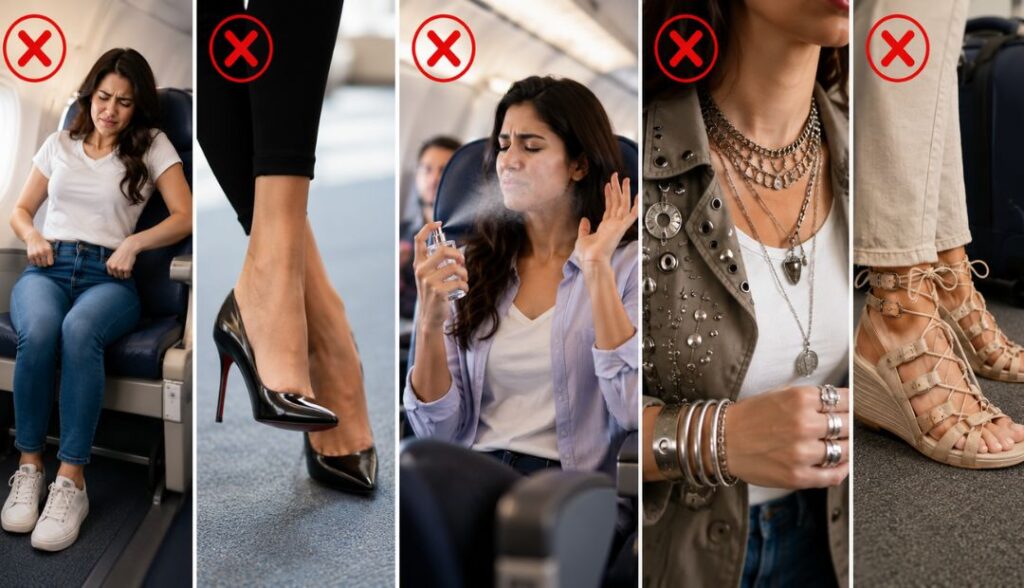
- Tight jeans
- High heels
- Heavy perfume
- Clothes with metal pieces, tiered jewellery
- Complicated footwear
Final Thoughts
When choosing outfit to wear on a long flight, focus on breathable layers, soft fabrics, comfortable shoes, and unrestricted movement. Loose-fitting clothing, moisture-friendly fabrics, and practical layering make a significant difference during extended travel, especially on flights longer than four hours. When in doubt, choose comfort, breathability, and a simple minimalistic design.
Explore More Travel Tips: