
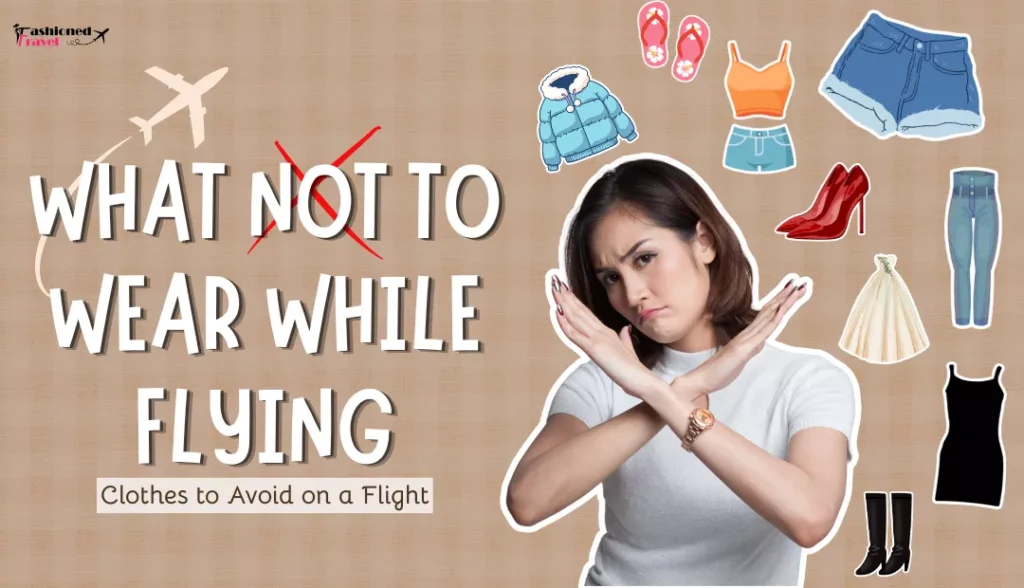
The biggest clothing mistakes on an airplane include tight jeans, toed sandals, synthetic fabrics, and anything restrictive, bulky or difficult to remove. Knowing what not to wear on a plane matters because flights involve long sitting hours, changing cabin temperatures, low humidity and occasional safety needs. Do not wear something that restricts your movement such jumpsuits or high heels which makes bathroom trips difficult.
This guide explains which clothing, shoes and accessories to avoid while flying, prioritizing comfort and practically over fashion for a smoother travel experience.
What to Skip for a Comfortable Flight
| What to avoid | Why it’s a problem |
| Tight jeans or non-stretch denim | During long sitting hours decreases circulation and increases discomfort |
| High heels or platform shoes | Unsafe in emergencies can cause swelling during long flight hours |
| Strong perfume or cologne | Confined space may trigger headache also cause discomfort to other passengers |
| Synthetic fabrics (polyester, nylon) | Traps heat, increases sweating and reduce breathability in the cabin |
| Contact lenses | Dry cabin atmosphere can lead to irritation and discomfort |
| Heavy jewelry or metal accessories | Slows down screening, also may feel restrictive when swelling |
Clothing items to avoid on a plane
Tight or Restrictive Clothing
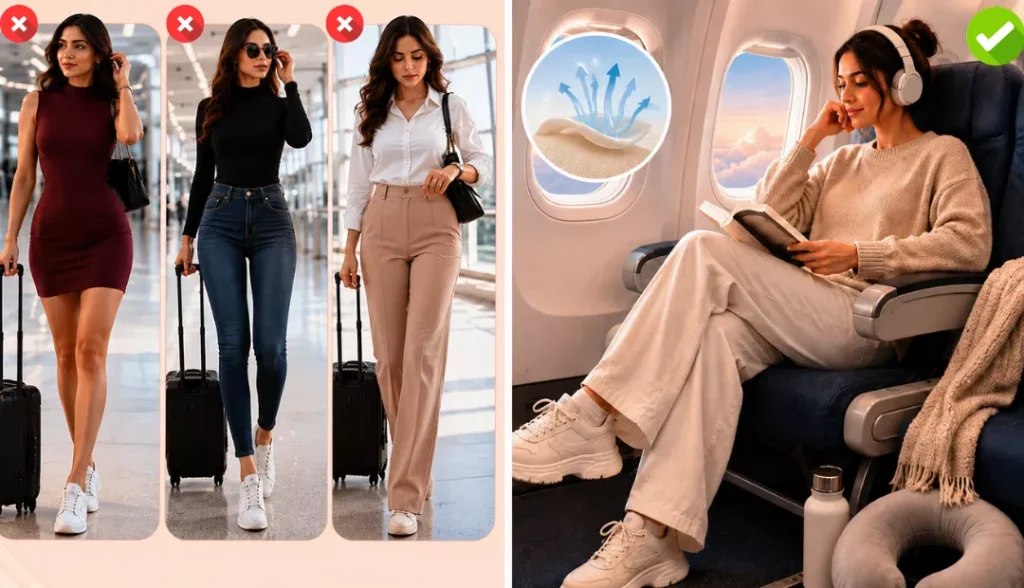
Bodycon dresses, skinny-fit clothes and stiff trousers they all may look good for pre-departure photos but they do not work well in a pressurized cabin. During long flight hours, circulation in the lower body naturally reduces when sitting, and tight waistbands or rigid fabrics can make it worse.
The trick to the best travel outfits is choosing clothes with a little bit of gentle stretch and airflow, like relaxed trousers or soft straight-leg styles, that move with your body, not against it, and keep you comfortable the whole trip.
Shorts
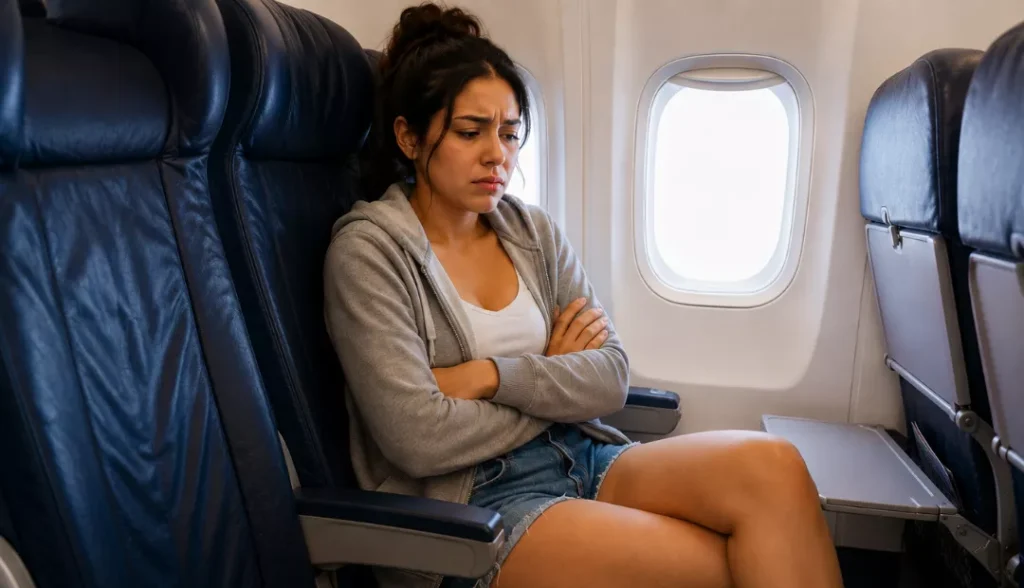
Shorts expose more skin to direct contact with aircraft seats, tray tables, and armrests, which is best avoided as these surfaces are not always freshly cleaned. Wearing them also makes cold cabin air feel more intense, especially during overnight flights.
Revealing or Skimpy Clothing
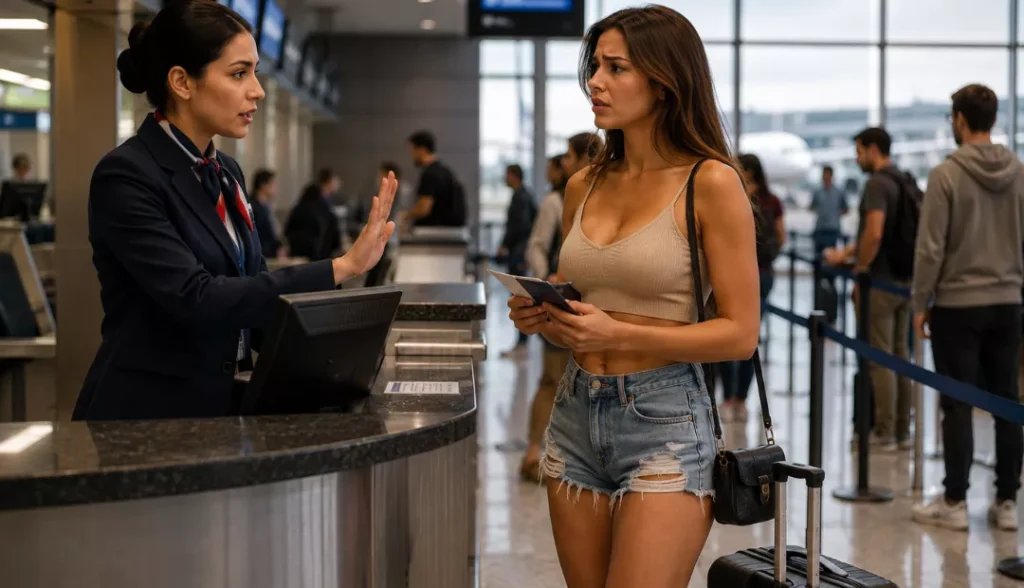
Many airlines reserve the right to refuse boarding if a passenger’s attire is found inappropriate or disruptive. You may want to avoid overly revealing outfits that sometimes create issues during boarding.
Beyond policy concerns, cabin temperature keeps changing, unexpected cold may become uncomfortable on long flights.
Bulky or Stiff Outerwear

Avoid heavy coats and rigid jackets, as they take up space at security checkpoints and are difficult to store in overhead bins. Bulky outerwear is inconvenient for nearly every part of the airport journey and can also feel restrictive once seated.
New or unworn clothing
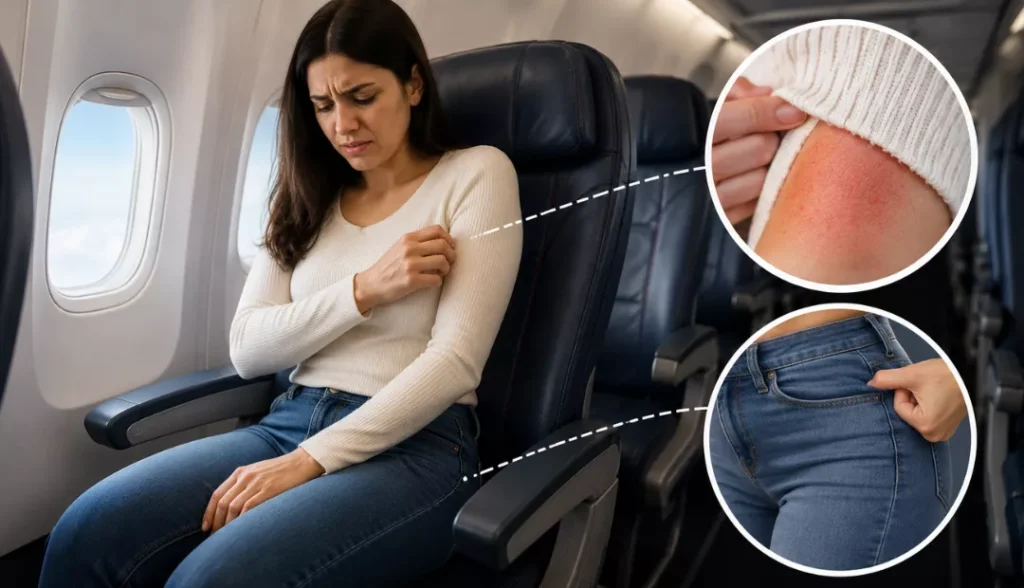
When understanding what not to wear on a plane, new clothes can be unpredictable, as long sitting hours may expose tight seams and discomfort. Even if they fit well at home, long sitting hours can reveal tight seams, scratchy fabrics, or pressure points that were not noticeable before.
Flights are not the right place to test clothing comfort. Already broken-in outfits reduce the risk of irritation, blisters, or unexpected discomfort during travel.
Footwear Mistakes to Avoid on a Plane
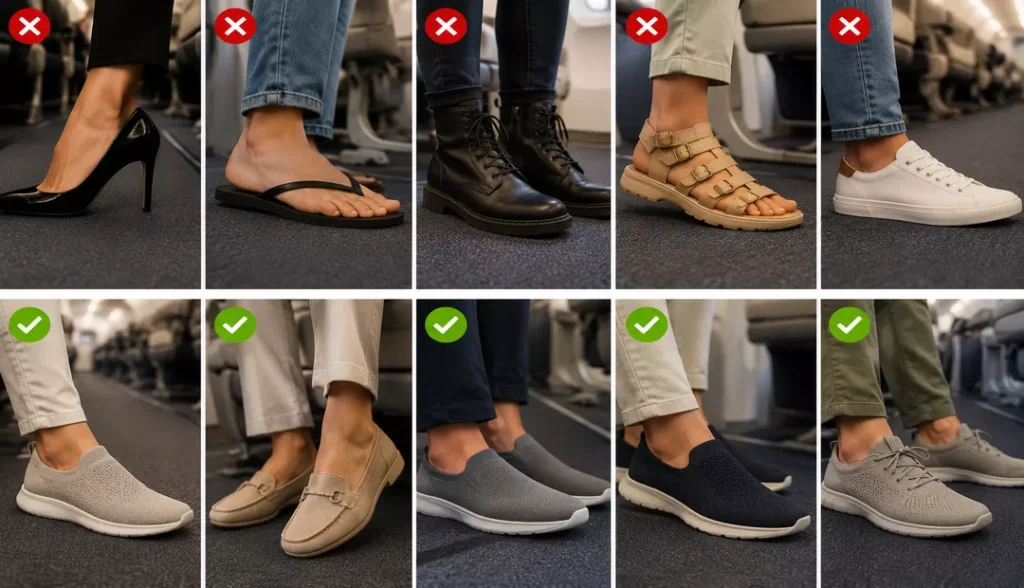
Avoid high heels, flip-flops, lace-up boots, overly complex footwear, and new shoes, as they can slow movement during emergencies and become uncomfortable while traveling. Stick with slip-on sneakers, cushioned loafers, or flexible walking shoes work best for most travelers.
Strong Odor
Imagine wrapping for a weekend long trip and your backpack already stuffed with worn clothes with only one clean shirt left buried beneath muddy gear. It seem easier to pull on yesterday’s shirt and hope no one notices. But it’s a bad idea, airplane cabins are enclosed spaces where passengers sit shoulder to shoulder for hours, making body odors easily noticeable than they seem on the ground. Keeping one fresh outfit aside can make the journey far more comfortable.
Conclusion
Remember, the best travel outfits are simple, breathable, and easy to adjust, making them well suited for long hours of sitting and changing cabin pressure. Understanding what not to wear on a plane helps you avoid discomfort and travel smarter. To simplify things, remember only three main priorities: comfort, safety and practicality.
Style your journey wherever you go. Find more inspiration at FashionedTravel.
Unlock more insights: