

Iceland is famous for unique beaches shaped by volcanoes and glaciers. Black basalt sand, glistening icebergs, and a red volcanic shoreline make this one of the world’s most unique and breathtaking coastlines. In fact, the famous beaches include Reynisfjara Beach, Diamond Beach, Stokksnes Beach, and Rauðasandur Beach. Many of Iceland’s famous beaches are located along the south coast and can be reached within a few hours from Reykjavík, the capital of Iceland.
In this guide, we will cover a concise summary of the Icelandic beaches, the reasons for black sand, and the best time to travel.
Why Are Iceland’s Beaches Black?
Iceland is located at a volcanically active zone, where the volcanic lava regularly meets the Atlantic Ocean. When the molten lava comes in contact with the cool seawater, it instantly cools down and converts into a small fragment called basalt rock. Over a period of time, sea waves grind this basalt rock into fine sand called basalt sand. This process continues to renew the black beaches of Iceland.
What Are the Best Beaches in Iceland?
1. Reynisfjara Beach
Reynisfjara beach is located near Vík village on the south coast. This is the most visited beach in Iceland. The beach is famous for its hexagonal basalt columns, sea caves, and Reynisdrangar sea stacks. Although it is one of the most dangerous beaches due to unpredictable “sneaker waves,” visitors should stay back from the shoreline and strictly follow the safety rules.

2. Diamond Beach
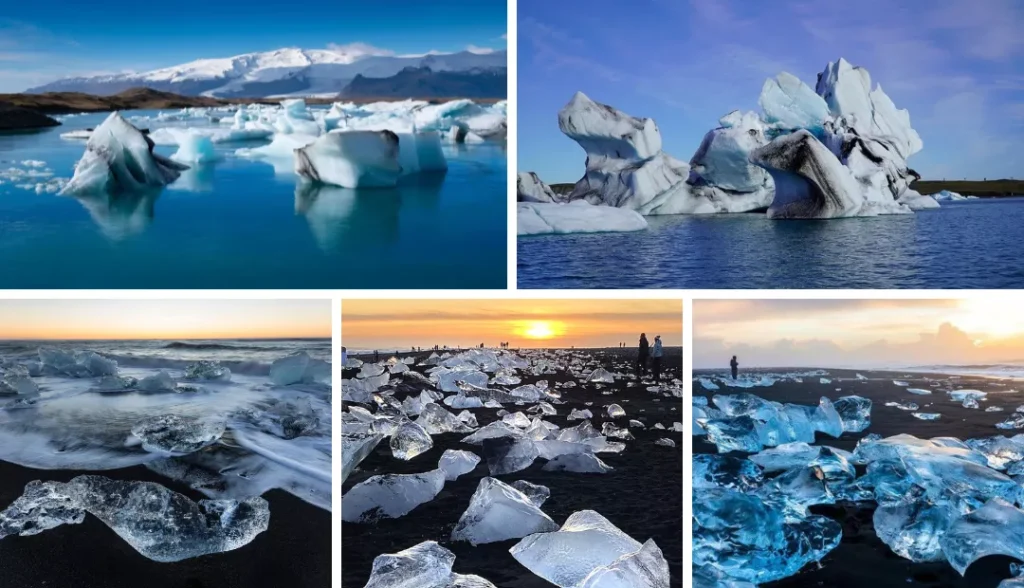
Diamond Beach is located across the road from Jökulsárlón Glacier Lagoon on the southeast coast. Icebergs break from the Breiðamerkurjökull Glacier and float through the lagoon and wash up on the black sand shore. This piece of ice looks glittery on the black sand; that’s why it is called Diamond Beach.
3. Stokksnes Beach
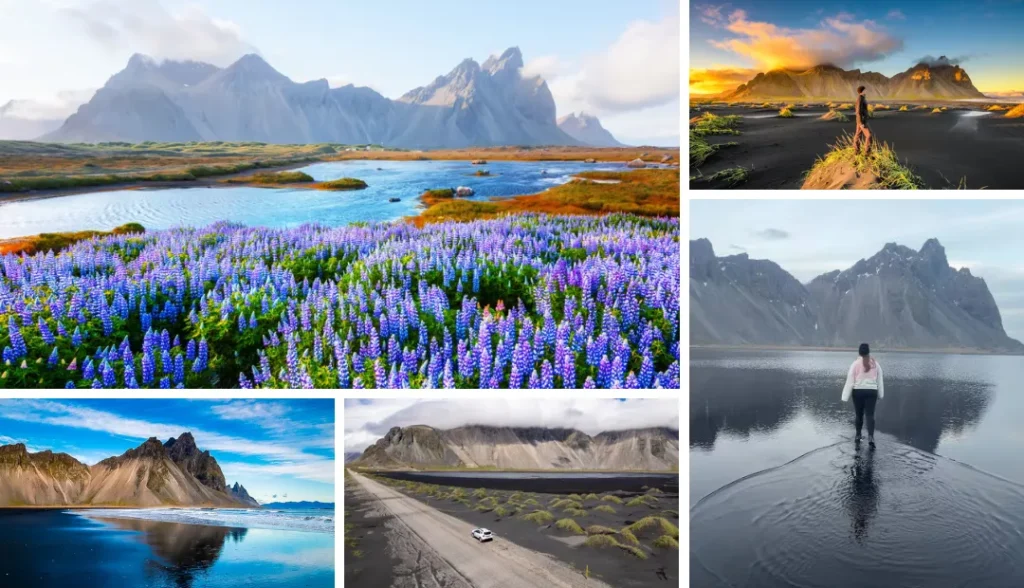
Stokksnes is a black sand beach, which is backed by the dramatic peak of Vestrahorn mountain near the town of Höfn in southeast Iceland. It is on private land requiring a small entry fee, but it is one of the most photogenic locations in Iceland. The view is breathtaking during the sunrise and northern lights seasons.
4. Rauðasandur Beach
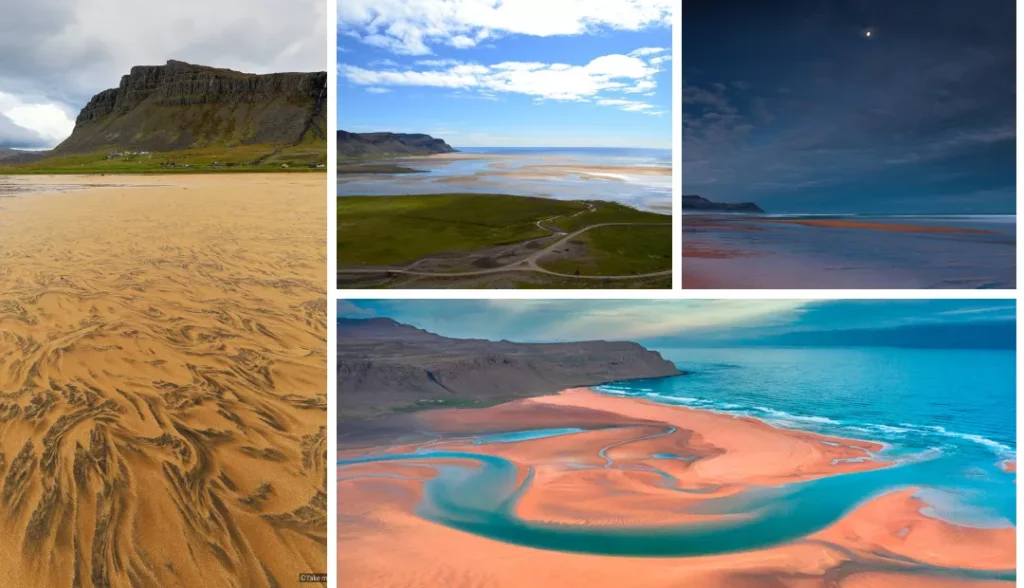
Rauðasandur is a beautiful beach that stretches for miles in the region of Iceland’s remote Westfjords. This beach is famous for its unusual reddish-gold sand, a total contrast to Iceland’s typical black beaches. It is less crowded than the other South Coast beaches due to its remote location.
5. Djúpalónssandur Beach
On the Snæfellsnes Peninsula, this black pebble beach is known for the rusted remains of a 1948 shipwreck and four lifting stones used to test fishermen’s strength. Meanwhile, exploring the beach, capturing beautiful photographs, and admiring the natural beauty create a truly memorable experience.

6. Nautholsvík Geothermal Beach
Nauthólsvík Beach is totally different from the other Icelandic beaches. This man-made beach is known for its golden sand and a geothermally heated lagoon. It is one of the only beaches where swimming in the sea is genuinely comfortable.

When to Visit Iceland’s Beaches Throughout the Year
- Summer (June–August): Daylight stays up to midnight, and the roads are clearer and easier to drive on.
- Winter (November–March): Best for recognizing icebergs at Diamond Beach and enjoying the northern lights above the black sand coastline.
- Puffin season (May–August): Puffin season is the time when Iceland’s famous puffin birds return to the nests, offering visitors excellent opportunities for birdwatching and photography.
Conclusion
Iceland offering black sand beaches, glacier icebergs, and volcanic landscapes makes it a unique coastal destination in the world. Each destination has its own charm and provides a completely different experience to visitors. Choose the season according to your interest to make the trip memorable. Summer is ideal for road trips, sightseeing, and long daylight hours. Meanwhile, winter is the perfect time for icebergs and magical views of the northern lights. Iceland’s beaches are extraordinary and offer memorable experiences for every traveler.
More Travel Guides: