
Moisture-wicking fabric pulls sweat away from the body and transfers it to the fabric’s outer surface, where it evaporates more quickly. This mechanism is called capillary action, where moisture spreads at the surface and evaporates faster.
This technology helps regulate body temperature and keeps you dry even after rigorous physical activities. Manufacturers use both natural and synthetic materials to make moisture control fabrics, including polyester, nylon, merino wool, and bamboo fabric.
In contrast, cotton acts oppositely, it wicks the moisture and holds it for a longer period of time.
How Moisture-wicking Fabric Works
When your body produces sweat, the tiny channels in fabric pull the moisture away from your skin and move it to the fabric’s outer surface, where it can evaporate more quickly. This action moves the moisture and spreads across the outer surface of the fabric.
The larger surface area allows the moisture to evaporate more quickly, helping the fabric dry sweat faster.
This fabric is the combination of synthetic fibers, natural fibers, or a blend of both.

Synthetic Materials
- Polyester – quick-drying and affordable
- Nylon – lightweight, strong, and stretchy
- Polypropylene – Highly hydrophobic, used as base layers and thermal wear
Natural and Semi-Natural Materials
- Merino wool – Naturally found from Merino sheep, merino wool is odor resistant and maintains the body temperature.
- Bamboo viscose fabric –This fabric has properties with natural breathability and a silky-soft texture.
- Modal – a soft-textured fabric and semi-synthetic fiber with wicking properties.
Advantages of Moisture-Wicking Fabric
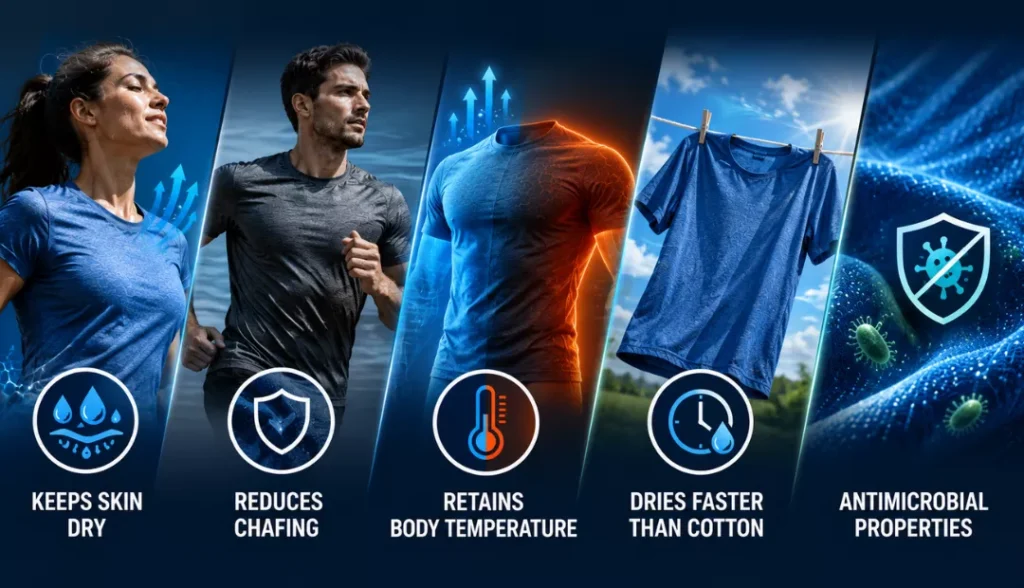
- Keeps skin dry during exercise: Absorbs sweat from the skin and prevents a damp and clingy feeling.
- Reduces chafing: Wet fabric irritates the skin by rubbing against each other and causing chafing. Fast drying fabric reduces friction and improves movement.
- Retain body temperature: The fabric spreads the moisture and evaporates faster. It is useful for warm climates and high-intensity training sessions.
- Dries faster than cotton: Cotton traps moisture and feels heavy while working out. This fabric dries faster, making it ideal for travel or multi-day hikes.
- Antimicrobial properties: Some garments have antimicrobial and anti-odor properties that target the growth of the bacteria responsible for sweat odor.
Does Moisture Wicking Fabric Have Any Downsides?
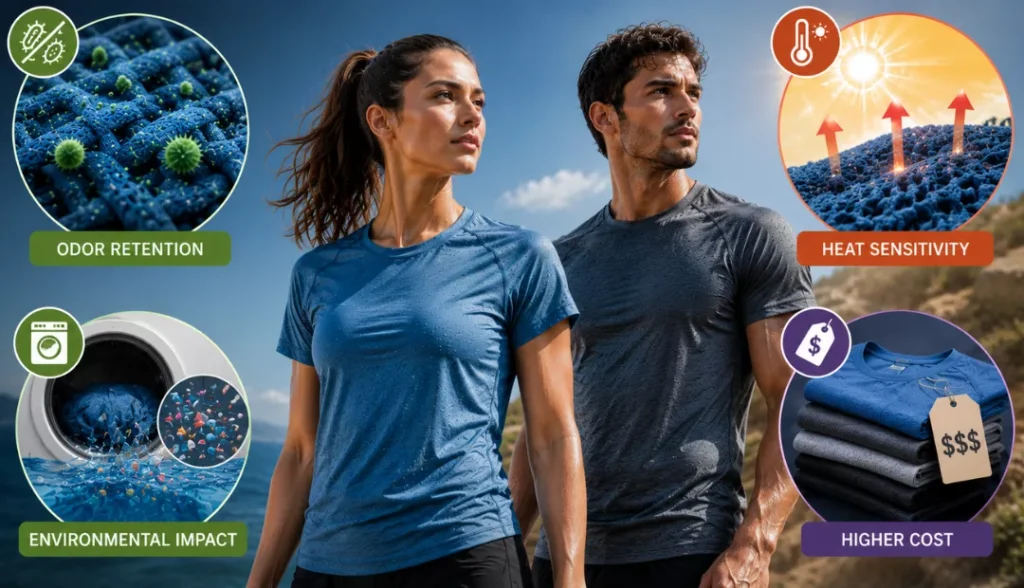
These quick drying fabrics are effective, but not for all situations. Consider some exceptions:
- Odor retention: Consider suitable washing care instructions; fabric holds bacteria more than natural fibers.
- Environmental impact: Most of the fabrics are made from petroleum-based materials, they release microplastics during washing.
- Heat sensitivity: Some synthetic wicking fabrics are sensitive to heat, which may feel warmer in high-heat climates.
- Cost: Premium wicking fabrics cost more than basic garments.
How to Care for Moisture-Wicking Material

Proper washing practices help maintain wicking performance over time.
- Effect of warm water: Repeating hot water washing damages the fiber channels and reduces lifespan.
- Avoid fabric softener: Softener clogs the channel and reduces wicking ability.
- Skip the dryer sheets: As the dryer heats up, the lubricants and softeners on the sheets melt and spread across the clothing, reducing the wicking properties.
- Washing care: Read the wash care instructions given for the fabric to prevent odor buildup.
- Turn garments inside out: Reverse washing reduces fiber damage and maintains the color of the outfit.
Bottom Line
Moisture-wicking fabrics provide an advantage over cotton for performing high-sweat activities. Properties like faster drying, reduced chafing, and regulating body temperature make a popular choice among athletes. They wick the sweat from the skin and spread across the fabric surface to evaporate faster than cotton. The options available in synthetic and natural fibers are essential for all-day comfort.
Check out more: