
Yes, a polo shirt is business casual when paired with the right pieces in the right workplace — so if you’re wondering “is a polo shirt business casual,” the answer depends on how you style it. It may help to think of workplace attire on a spectrum, where one end is business formal and the other end is casual, with business casual and smart casual in between. Suits, ties, dress shirts, and formal shoes fall under the business formal category.
Business casual permits collared shirts, polos, chinos or tailored pants and closed-toe shoes. Smart casual can include cleaner clothes like jeans, cardigans, and casual shoes, while casual wear includes t-shirts, hoodies and sneakers.
What Exactly Is “Business Casual”?
Business casual is the look between office formal and everyday casual. It emphasizes polished comfort and is subject to wide variances by industry, company culture and region.
Business casual is situationally somewhere on a spectrum: business formal → business casual → smart casual → casual. (Some workplaces interpret it strictly; others have more leeway regarding color, fit and accessories.)
In practice, business casual items include collared shirts, tailored pants, chinos, blazers and simple shoes.
Disqualifying items are t-shirts, hoodies, athletic wear, ripped or excessively casual jeans and shoes such as flip-flops or dog-eared sneakers.

When a Polo Shirt Is Business Casual (and When It Isn’t)
Whether a polo shirt is business casual depends on context, workplace culture and the way it is worn.
When it’s okay
Office wear
In tech companies and startups, polos are considered acceptable. These environments prioritize more on comfort and focus over style, making a polo with chinos or tailored pants perfectly acceptable.
Sales Environments
Polos are commonly used as uniforms or standard business attire in sales and retail spaces. A polo, tailored pants, and polished footwear meet the need for employees to look professional while staying comfortable during long hours of standing.
Sports, and Leisure Industries
Polo shirts are used in the golf, sports and leisure industry. They provide freedom of movement, look smart and (crucially for employees who meet clients or do things that involve physical activity) professional.
Casual Fridays in Corporate Offices
Even corporate offices have casual Fridays, which allow wearing a polo shirt. When worn with chinos or dress pants and suitable footwear, polos enable team members to wear a more casual outfit while still observing the office’s dress tone.
When it’s Not
Client-Facing Meetings
Not all situations are right for polos. In law, finance and other conservative fields, client-facing meetings generally call for button-down shirts, blazers or other formal businesswear.
Formal Interviews at Traditional Companies
Formal interviews at traditional companies typically require a suit or collared shirt and blazer.
Industries with Strict Dress Codes
In industries where strict dress codes exist and stricter attire is expected (banking, legal or government), polos may be considered too casual.
Dealbreakers
Large or visible logos and graphic prints make the shirt look casual rather than professional. Poor fit, either too tight or too baggy, undermines the overall appearance. Last but not least, matching a polo with athletic shorts, flip-flops or sneakers is likely to render it inappropriate for business casual environments.
How to Style a Polo Shirt for a Business Casual Look
Pair with chinos or tailored trousers (avoid jeans unless allowed by company culture)

Tuck in or half-tuck for a neat appearance

Footwear: loafers, leather sneakers, or clean Oxfords

Layer with a blazer to elevate the look

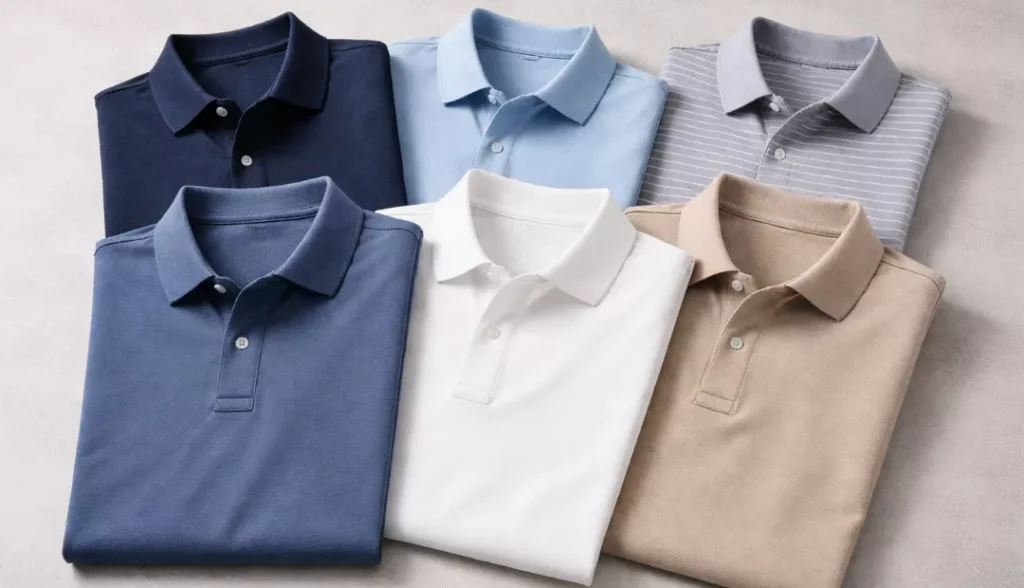
Stick to solid colors or subtle patterns, like fine stripes
FAQs:
Not usually — in professional contexts, minimal branding or unbranded polos are preferable.
It depends on the industry and environment you are in, some tech companies might allow it, but it’s better to stick to the old norms in the financial and law sector.
First understand that polos overlap both categories: a neutral polo paired with chinos works well for business casual, while for smart casual, more relaxed fits and colors can be added.
Conclusion
Polo shirts are business casual when you style them correctly. Proper sizing, fabric choice, and pairing can make them a comfortable work-ready option for a range of offices. They’re versatile, a bridge between casual Fridays and everyday office wear, so they’re dependable wardrobe workhorses.
Keep Exploring: