

A typical sandwich bag (quart-size zip-lock type) weighs around 1.6 to 2 grams. That number can vary a little based on the brand, thickness (mil rating), and general size of the bag, which directly answers how much does a sandwich bag weigh. Thinner fold-top bags are lighter, while freezer bags and reusable ones tend to weigh much more.
This guide includes all the most common types of plastic bags, such as zip-lock bags, fold-top sandwich bags, freezer bags and reusable alternatives like silicone and PEVA.
Sandwich Bag Weight by Type
Different types of sandwich bags vary quite a bit in weight, especially once you move beyond standard lunch bags.
| Bag type | Typical Dimensions | Typical Weight |
| Quart-size zip-lock bag | 7 x 7.5 inches (18 x 19 cm) | 1.6 – 2 g |
| Gallon-size zip-lock bag | 10.5 x 11 inches (27 x 28 cm) | 3.5 – 5 g |
| Snack / fold-top sandwich bag | 6.5 x 5.5 inches (16.5 x 14 cm) | 1 – 1.5 g |
| Freezer bag (thicker plastic) | 7 x 8 inches (quart) / 10 x 12 inches (gallon) | 4 – 6 g |
| Reusable silicone sandwich bag | 7 x 7 inches (18 x 18 cm) | 25 – 50 g |
| Reusable PEVA / fabric bag | 7 x 8 inches (18 x 20 cm) | 15 – 30 g |
What Determines the Weight of a Sandwich Bag?
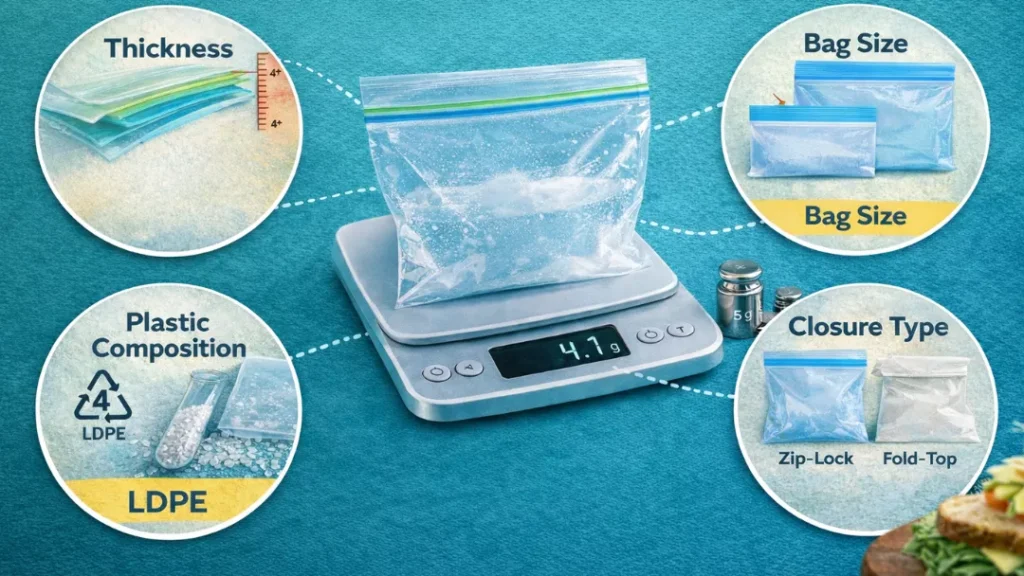
There are a few specific factors that determine the weight of a sandwich bag.
The biggest driver is the thickness of the material. Plastic bags are measured in mils, and above-average thickness bags use more material. A freezer bag, for instance, is built to withstand tearing and moisture, so it’s heavier than a basic sandwich bag.
Bag dimensions such as a gallon bag is larger than a quart bag, even at the same thickness, it weighs more, in plastic.
Closure type makes a negligible yet perceivable difference. A zip-lock strip generally adds around 0.2 to 0.4 grams versus a fold-top design. Double-zip freezer bags add still more because of extra sealing material.
The composition of the plastic, like most sandwich bags, is lightweight and flexible, and uses LDPE (low-density polyethylene). The weights of HDPE and some BPA-free options vary slightly due to density and structure.
How to Weigh a Sandwich Bag on Your Own

Use a kitchen or postal scale that is precise to 0.1 gram at least. Weight, tare the scale so that it reads at zero, then place the empty bag on a flat surface.
As a single bag is very light, weighing multiple bags at once is the most reliable way. For example, weigh 50 or 100 bags combined and divide by the number in total. This takes out minor measurement errors and produces a much cleaner average.
Some scales used for this type of measurement, such as AWS precision scales or Etekcity food scales, provide accurate results in grams.
(For context, 1 gram is approximately 0.035 ounces, but grams are much more sensible at this order of magnitude.)
Use Cases Where Weight Really Important
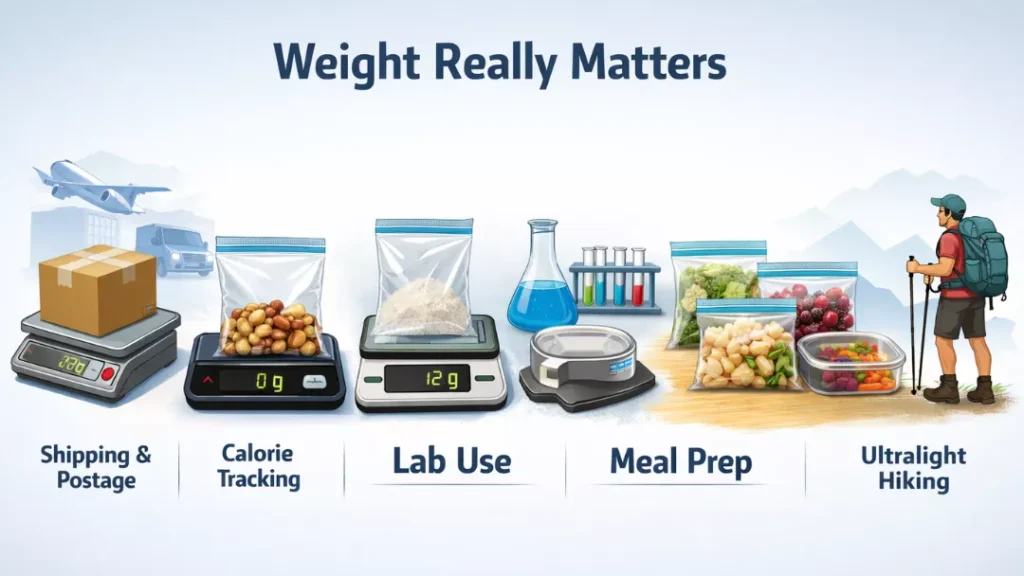
When it comes to something so light, the weight of a sandwich bag becomes surprisingly important when considering real-world practicality.
In shipping and postage, carriers such as USPS and FedEx price by the total weight of your package. One bag doesn’t matter, but hundreds or thousands could weigh people down.
When it comes to food tracking, particularly for accurate calorie or macro logging ie if you are eating your own portion from a bag of nuts etc the bag weight should come out. Even 2-grams difference matters in measurements when accuracy is key.
Ultralight packing is about eliminating every unnecessary gram for backpacking and hiking. Exchanging bulkier storage solutions for smaller bags can make an impact during long hauls.
When precise weights need to be controlled and subtracted, sandwich bags are sometimes used for this purpose in lab or scientific settings.
Keeping portion sizes consistent when freezing is much easier if you know the weight of the bag in cooking and meal prep.
FAQs
For a single item, not really. But in bulk, yes. For example, 100 standard sandwich bags can add roughly 150–200 grams to a shipment.
A typical quart-size bag weighs about 0.056 to 0.07 ounces, depending on thickness and brand.
Yes, if you’re aiming for accurate calorie or macro tracking, always tear the scale with the bag before adding food.
Conclusion
The weight of disposable sandwich bags usually falls in the 1.5 to 2 gram range for most models (especially standard quart-size zip-lock designs).
The exact weight depends on material and thickness, which is key to understanding how much does a sandwich bag weigh, but freezer bags and reusable varieties weigh much more. Though the difference may seem small, it compounds across many items and makes a difference in reducing shipping costs, tracking food, and optimizing how much you can pack for travel.
Need exact numbers? Use a basic kitchen scale and a batch-weighing method, this will give you the most accurate results.
Stay tuned with FashionedTravel for practical tips and quick facts.
Don’t Miss These: