

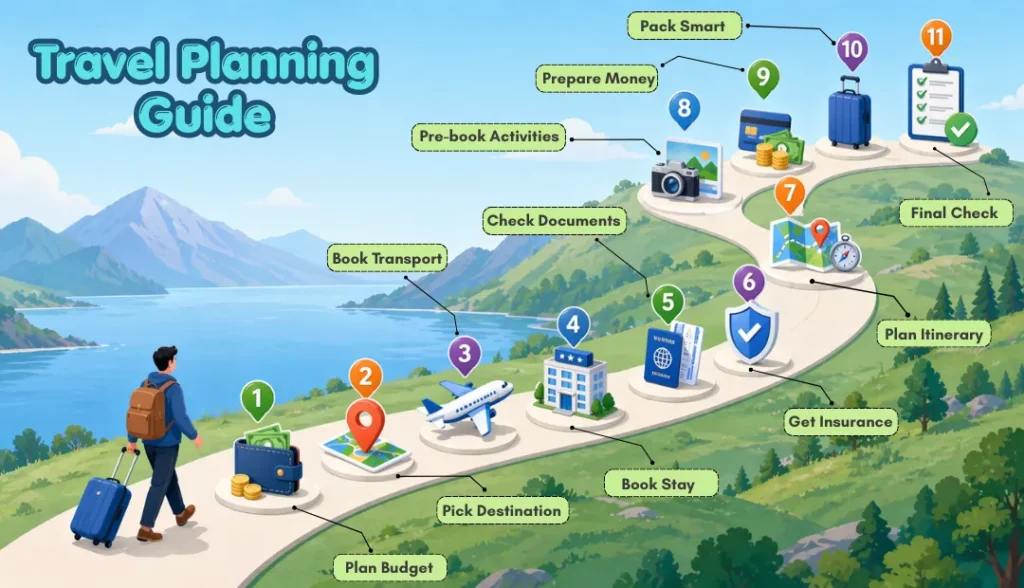
While planning for a trip, all you need is a clear specific sequence, setting a budget, choosing a destination, booking transport and accommodation, planning activities, gathering documents, arranging finances and packing appropriately. This guide shows you how to organize a trip step by step, helping you to plan your trip with less stress as you take each step logically, selecting destination dates and booking strategically within an achievable budget.
1. Start With Your Budget
Let’s first figure out how comfortable you are in spending, think of four main categories as follows: transportation, accommodations, food, and activities. Then there are local transport fees, extra coffee or any spontaneous souvenir purchases.
Well, you just don’t need the exact amount right now, but it’s always good to have 10-15% extra in case of any unexpected costs when you organize a trip. Budget transparency makes decision-making faster and more concrete.
2. Choose a Destination that Fits your Timing and Budget
A destination you finalize will feel different at different times. Visiting Paris in summer gives a completely different experience than in winter. When travelling during peak seasons expect huge crowds and higher prices while off-seasons are cheaper and may be limited to less attractions or experiences. Then when is the sweet spot? The answer is the “shoulder season” not right before or after peak time. You can still have good conditions with better prices and fewer people.
3. Book Flights and Transportation Early
To organize smooth trips, especially international ones, booking early offers better prices and more options. It gives you better choices, fare comparison tools, and price alerts, helping you find the best deals without constantly monitoring prices. Moreover you don’t need to obsess over getting the lowest fare, the goal is to book at a reasonable time and avoid paying more.
4. Book your Accommodations in Advance
Once transportation is sorted out, the next step to ensure a comfortable stay. When visiting a popular destination, book your accommodations 2–4 months in advance. This gives you a better chance of finding a place of your choice and at a fair price. Waiting for too long you may end up with only expensive options and not so convenient places. Lastly, pay special attention to cancellation policies when booking.
5. Check Your Travel Documents
Many countries require your passport to be valid for at least six months after your travel dates. Visa processing times may also vary, some are quick and simple while others take weeks. As soon as your travel dates are confirmed, check and initiate all required processes immediately.
6. Get Travel Insurance
Travel insurance may not be an exciting part, but it’s one of the smartest and not to be seen like an added cost. In the times of emergencies like trip cancellations/delays/lost baggage you’re covered in that way. Having travel insurance makes a huge difference financially and logistically, look it like a backup plan.
7. Build a loose itinerary
You don’t need to plan every hour but a travel itinerary solely to guide you. Start by planning two or three main things per day, leaving room for wandering, resting, spontaneous finds, or just taking things slower. It’s also important not to cram too many things in one day that will only lead to a stressful experience. A lighter plan usually leads to a better experience.
8. Pre-book Anything that Might Sell Out
Popular museums, tours, attractions, and restaurants, very much possible they fill out in advance, especially in busy destinations. If there’s something you know you really want to do, check the official website or trusted booking platforms early and reserve your spot.
9. Get Your Money and Cards Ready Before You Leave
Informing your bank about your travel dates will prevent any unforeseen card blockings and ensure smooth operation during your journey. Carry at least one spare card just in case one goes missing or technical difficulties arise during travel.
10. Pack Light and Use a Checklist
Simple packing keeps things in check and less chaotic. If you can manage with a carry-on, you’ll save time, avoid baggage fees, and make moving around much easier. Focus on clothes that suit the weather and can be mixed and matched easily.
A packing checklist helps you remember the basics when you organize a trip, like chargers, medications, travel documents, and anything else that’s easy to forget when you’re in a rush.
11. Conduct a 48-hour Pre-Departure Check
The final step is all about verifying everything done according to plan.
Complete online check-in, download boarding passes and store offline maps; make sure that all devices are fully charged before departing home.
Verifying accommodation details, check-in timings and transportation arrangements in order to prevent last minute confusion. These confirmations help avoid last-minute panic.
Conclusion
Planning a trip becomes manageable when you follow a clear order to organize a trip effectively. Plan a budget, select an ideal destination and time, arrange transport and accommodation early. Don’t forget to handle documents efficiently, create an adaptive itinerary, secure key experiences beforehand, plan finances wisely, pack efficiently, and perform one last inspection prior to leaving home. Each step builds upon itself. When completed successfully, the journey becomes far more enjoyable and straightforward.
Discover More: